Posts in Events
BACKYARD COTTAGES PROFILED ON THE SEATTLE CHANNEL

The Seattle channel recently interviewed myself and CAST clients Kate Lichtanstein and Ric Cochrane regarding the backyard cottage we are currently working on together. They included our project in a broader story that profiles an owner of a recently completed backyard cottage and gives a basic outline of the new Seattle backyard cottage ordinance.

Seattle Channel Video can be played in Flash Player 9 and up
The Sunset Substation: a new pocket park for Seattle

We are very excited to begin a new project for the Sunset Hill neighborhood to transform an abandoned City Light substation parcel into a pocket park.  Based on the input from the community thus far, the program is very intriguing:  a community space with an artist-in-residence caretaker, powered by a serious photovoltaic array. There may be more or different elements as the project evolves in the community design process, and as we navigate through various City agencies and funding sources, but fundamentally this has all the values we expound as a firm:  sustainable building, energized public space, housing options/density, and  an interactive process that invests people in the civic life of their neighborhood.

In 2008, I designed a structure with a similar program for a Dwell Magazine conceptual competition:
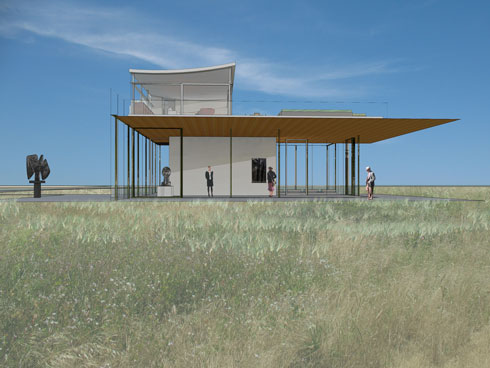
Crissy Field House

Set at the east end of Crissy Field in San Francisco, this Community Room/Exhibit Hall creates an anchor for a new sculpture park. The hall is a multipurpose space, more infrastructure than building--for public events, private events, exhibits, etc. The glass sliding panels open the hall to the public, the park and the views of the Golden Gate Bridge.

A small caretaker's residence is situated on the second floor, using the broad roof of the Community Room as a vegetable garden, eliminating the conflict between the public park and the private residence. The glass screen walls provides security, and electricity--the design on the glass is created with a photovoltaic interlayer, which powers the house and hall. Stormwater is captured, stored and used to irrigate the roof garden.

While this little conceptual project may help to inform the Sunset Substation, I'm excited to apply some of this experience in designing a real world pocket park.

Stay tuned....

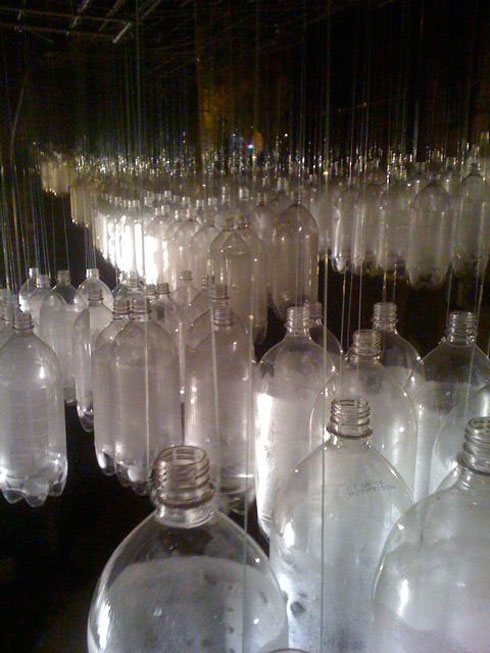
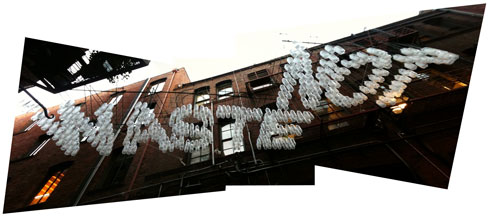
WASTE NOT--an installation in Pioneer Square Alley

alley The big opening is tonight from 5 to 9, between 1st and 2nd just south of Pioneer Square--

Yesterday we hoisted the installation in place. While we still have to do lighting, the impact is great! From the end of the alley, the installation looks like a lonely cloud hovering there, and only once you get beneath it can you see the message "WASTE NOT."

Another project in Fine Homebuilding Magazine!

artalejo-dining-kitchen-webWe just heard that another one of our projects is going to be featured in Fine Homebuilding Magazine! The Artalejo-Lacas Residence is a 'zen craftsman'--traditional bungalow massing with some really wonderful spaces inside and details inspired by Japanese vernacular houses.

The project will be in the annual Houses issue--which is, well, especially cool because only a handful of houses nation wide make the cut.

Breaking---Backyard cottages pass 9-0!

The ordinance  to allow backyard cottages in the other three quarters of Seattle just passed 9-0!  The council's comments focused on the exhaustive community outreach, successful pilot program and benefit of having this housing choice for Seattle. Excellent work by the planning commission, DPD and council.

Usually, the city's process oriented decision making can be cumbersome, and having spent hours in meetings, testifying, and communicating with council, I feel vindicated that our involvement has helped in some small way to bring some innovation to the Single Family zoning.

We're excited to design some of these--in part because of the opportunity to foster multi-generational housing, and the option of building a smaller free standing structure rather than building an addition.  Plus, it is a really fun scale--I think more people will be thinking about bonus studios rather than housing units.

Welcome Parkour Visions!

I would like to take a moment to welcome Parkour Visions, our new building mates, to our corner of Freelard. We've always tried to keep a fun group of creative folks in our building and I think we are set to continue the trend.  This weekend Parkour Visions had their grand opening, and all of us at CAST are looking forward to getting to know Rafe and Tyson better as we take them up on some lunch time workouts!  There has to be some form of symbiosis (or karmic irony) that an architecture firm and a Parkour gym are sharing the same building, but we are all excited to find out what it is like to play more directly in our built environment!

EventsStefan HampdenComment
Equinox Dinner

Thanks to Stefan for hosting our seasonal CAST dinner.  Great food and a big turnout, and it felt like some of the events we hosted pre-construction industry implosion.  We had a lot to celebrate:  our 11th year in business, and some great new projects on the boards, such as Vagabond Ranch,  the Causey's Learning Center expansion, and Zander and Megan's new house, plus welcoming aboard Forrest Murphy, our latest collaborator.

SEATTLE BACKYARD COTTAGES-UPCOMING VOTE

The Planning, Land-Use and Neighborhood Committee is planning on voting on the Backyard Cottages on October 8th.  Last chance to make yourself heard on this issue! It will be a packed agenda, with discussions of the Multi-family code revision as well as the design review process (which will be mandatory in Multi-family).

IN-FREMONT 10X10X10

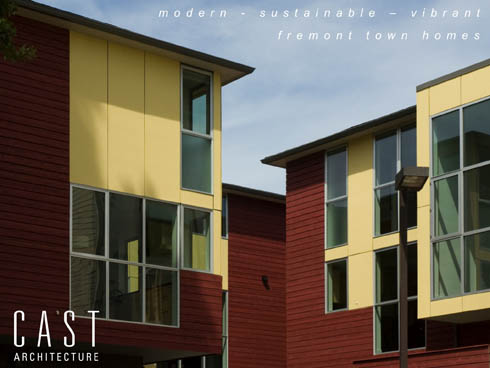
The 10x10x10 is an event put on by the Northwest EcoBuilding Guild annually to highlight regional sustainably oriented projects each year.  The name derives from the fact that they showcase 10 projects, and give each presenter 10 minutes to talk about 10 slides.  This year CAST was selected to be one of the presenters for our work on in-fremont, a series of 5 town homes designed for 5 star BuiltGreen certification. The event was held at the Gates auditorium, at the Seattle Public Library last Friday. There were some great projects discussed - I especially enjoyed Christina Bollo's talk from SMR on Kenyon House a LEED platinum affordable housing project.  Since I have all the material handy I thought I would post the slides from my talk, as well as a quick transcript, which steps through some of the concepts, and techniques we were working on with the in-fremont project.

Slide01

SLIDE 1 - Intro:

  • In-fremont is a set of 5 town homes finished in the spring this year – which was not exactly great timing!
  • But we had a client who was excited to explore what we could do in terms of a high quality sustainably minded project
  • In 2007 we received a Built Green grant in their multifamily category, which was a great help in trying to push a project like this forward.

Slide02

SLIDE 2 - Quick orientation:

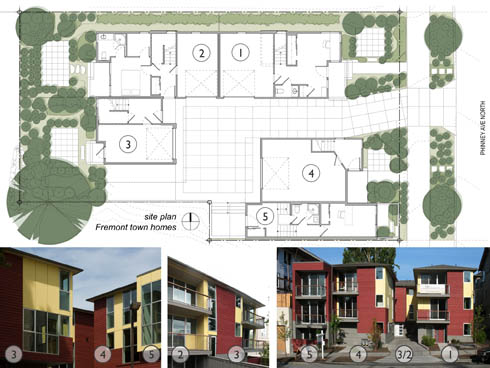
  • Location: just north of 36th in Fremont on phinney – extremely pedestrian oriented location.
  • 5 units counterclockwise. Goal was to Break out of the typical 4 pack plan you see all over.
  • This is a bit of an atypical site having a 10’ wide x 40’ deep slice of commercial zoned C1-40 in an otherwise typical L-2 lot.
  • Since we could not span across the zoning line with this unit, it provided a unique constraint as well as a great tie in to the 10x10x10 …
  • So in addition to the 10 presenters and 10 slides and 10 minutes, i‘m going to add 10 feet.  That is the outside to outside dimension of unit 5 and good segway for talking about sustainability and scale.

Slide03

SLIDE 3 - unit 5:

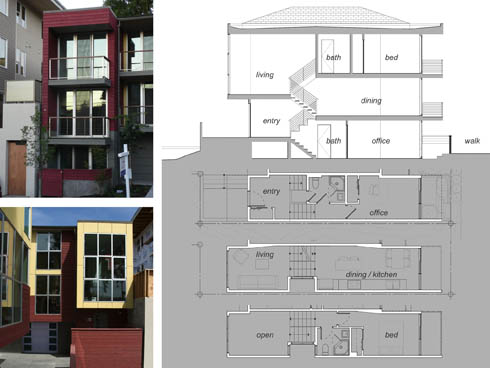
  • Unit 5 ended up being a 950 sqft 2br 2 bath
  • Quantity is intrinsically linked to sustainability - you can do as much advanced framing, and responsible specifications as possible, in the end the way to leverage all that is to reduce size – that cuts across all the materials and finishes.
  • Key to selling people on smaller is making sure they are extremely desirable, and functional spaces
  • Staggered section helps break down the length of the building.
  • Central light well 3’ setback brings natural light to the core of the building.
  • This was envisioned as a live work scenario – having an office with sidewalk access for clients.
Slide04

SLIDE 4 - unit 5 pictures:

  • To put it into context this is 400 sqft lot – that is an order of magnitude smaller than the typical Seattle single family lot – this means fewer materials, higher density, smaller footprint & lower impact.
  • Despite the size this is a very dynamic space - It wont be sustainable if no one wants to live in it.
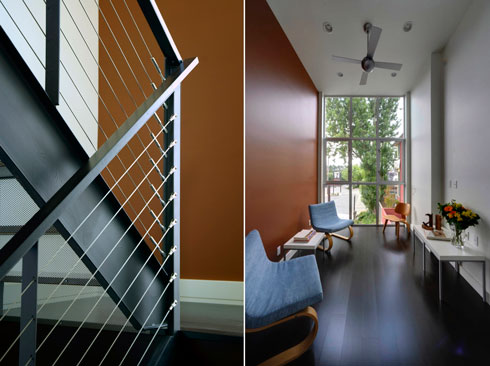
  • The stairs act as a transparent screen which reveal adjacent spaces and light, while breaking down the overall length and volume.
  • Dramatic 12’ high living room and glass walls, gives the space sense of volume, variety  and levity which would have been lacking without the split level.

Slide05

SLIDE 5 - power plant:

  • We ended up settling on a gas boiler to drive the radiant floors and domestic hot water.
  • This single piece of equipment runs both systems with instant on heat and no standby losses and a 93% efficiency rating.
  • All the units are plumbed in for solar hot water, which would preheat the domestic hot water loop for the boiler.
  • In terms of panel placement, we realized that we had two sites with better solar access, and so we created a solar easement as part of the unit lot subdivision to allow all the units to place and maintain the panels relative to solar access rather than property lines.
  • According to the city this was the first time in Seattle this was done for solar access in a short plat.
Slide09

SLIDE 6 – details:

  • On the exterior we used a rain screen throughout - simply holding the siding off the building with a vented air space, allows for the walls to dry out, reducing the chances of rot and mold, and allows the finishes to last substantially longer.
  • Bamboo & concrete radiant floors aid in air quality - no carpet or ducting for mold or dust to gather.
  • Site built casework such as screen frames and treads made of bamboo plywood.
  • Trim all finger joined poplar - no mdf.
  • Low voc paint – waterborne clear coats – compact florescent energy star lights throughout.
Slide06

SLIDE 7 – air sealing:

  • Since most heat loss in a reasonably insulated home occurs thru infiltration rather than radiant loss, a composite system of spray foam & fiberglass batts was used to create the air seal.
  • This creates an R-24 wall and allows the air barrier to be achieved more easily in a production environment – only one trade is then responsible for the bulk of the work.
  • With the decreased infiltration, comes the need for increased ventilation.
  • Heat recovery ventilators brings in fresh air while recovering aprox 80% of the embodied energy, which keeps a tight home healthy and energy efficient.
  • Garage included an exhaust fan equipped with a motion sensor.
  • Also tied into an ev charging station so the fan can be activated when charging to take care of any off gassing.
Slide07

SLIDE 8 - garage as flex space:

  • While parking is required by code, cars are basically what ruins the ground level of most town homes.
  • Given the pedestrian oriented location of the site we wanted to plan for the possibility that they might be used as a studio, shop or bedroom
  • Natural light / aluminum doors with sidelights, help make drive court a more human space, matching the detailing of the rest of the windows on site.
  • The garage is fully insulated both from the outside and the rest of the house so they could be used as garage or habitable space.
Slide08

SLIDE 9 – framing:

  • Floor to ceiling glass - No headers or cripples - typical rim joist was adequate for all but a handful of openings.
  • 24”oc studs on 75% of walls to reduce thermal bridging.
  • Insulation heal on truss, allowed for r-50 in the roof all the way out to the edge of the building, and maintain clearance for eave vents.
Slide10
SLIDE 10 – wrap-up:

  • In some of these images you can really get a sense of the affect of the floor to ceiling glass on the quantity of natural light and the way it washes the ceiling & floor.
  • This project was really rewarding working on compact plans and trying to wring the most out of the smallest amount.
  • Quality over quantity ended up to be one of the main ways that we were able maximize the affect of specking responsible materials and systems.