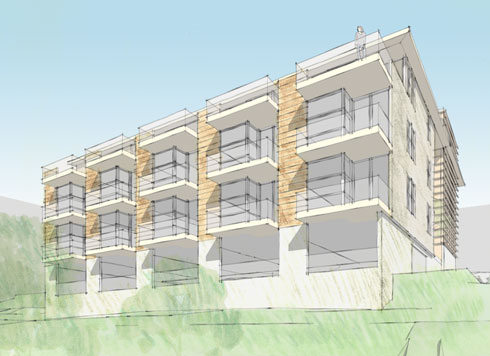
Posts in Sustainability
Seattle is about to roll out a brand new zoning designation, Residential Small Lot. Is it filling a gap, or creating one?
RSL Walk ups and cottage developments create a neighborhood within a neighborhood. 

RSL Walk ups and cottage developments create a neighborhood within a neighborhood. 

Seattle is facing a housing shortage, a climate crisis, and an increasingly inequitable city. Allowing more dwelling options, at various sizes and price points, is a great strategy to combat all three. Enter the Residential Small Lot Zone, Seattle’s attempt to add less expensive dwellings in dense, amenity rich urban centers without disrupting the historical fabric of single family detached houses. 

As part of Mandatory Housing Affordability (MHA), Seattle is rezoning many of the Urban Village parcels currently zoned ‘Single Family’ to ‘Residential Small Lot‘ (RSL). RSL exists under the code right now, but is applied to only 7 acres of zoned land in Seattle and has narrowly defined housing types and restrictions that have kept it from wider acceptance. Under MHA, RSL will be expanded to 768 acres and include about 6200 Single Family Lots. The proposed code has been rewritten from the ground up, so let’s dig in and see what it is likely to produce for Seattle’s neighborhoods. 

Function

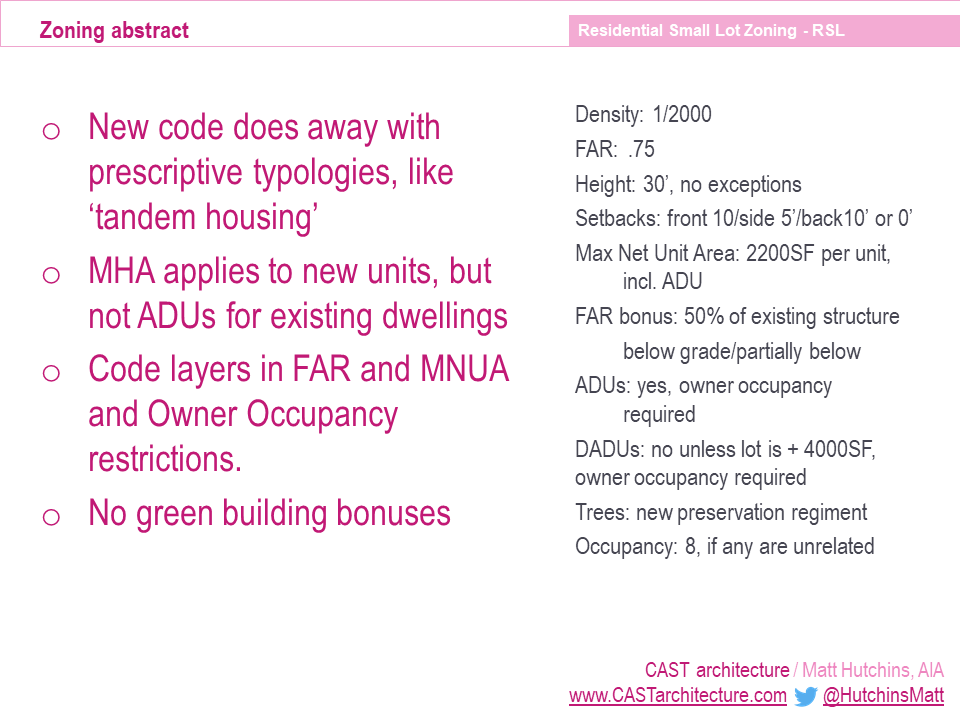
Slide5.PNG

Reading the definition of RSL, it is hard not to feel sorry for this hard working zone.

It has to be a little of everything to everyone. It is uncommon for a zone description to get into issues of affordability, children, and the desires of its residents. We don't expect the description of General Industrial 2 (IG2) to make judgments about dockworkers’ life choices. Or Downtown Office Core-1 (DOC-1) to wonder about whether people in Downtown Office Core 2 (DOC-2 ) feel development there is appropriate.

Nevertheless, it exposes a question. What is the mission of RSL? Is it a transition between Residential zones? Is it meant to capitalize on the proximity to urban centers by putting residents close to amenities, jobs and transit? Is it fighting displacement, or fostering density? What need does it serve, and what is the positive vision of that zone? Right now, it is formulated with a little of everything, including some new stuff, and takes elements from single family, multi family, bridges residential and building code with a dash of high minded mission to address family housing and affordability.  It is a little like this: 

RSL.  Not elegant, but adapted to its environment.

RSL.  Not elegant, but adapted to its environment.

The Nitty Gritty: What does it look like on paper? 

Slide7.PNG
Slide8.PNG

What does RSL look like? 

Before RSL zone, this Single family zoned street has 28 dwellings. 

Before RSL zone, this Single family zoned street has 28 dwellings. 

And again, after a generation of development doubles the number of dwellings:

57 dwellings on the street, double the current density, but not much change at street level. 

57 dwellings on the street, double the current density, but not much change at street level. 

Prototypes for RSL Zoning

We've taken the liberty to suggest some prototypes, based on traditional 'missing middle' multifamily, optimized for this zoning.  

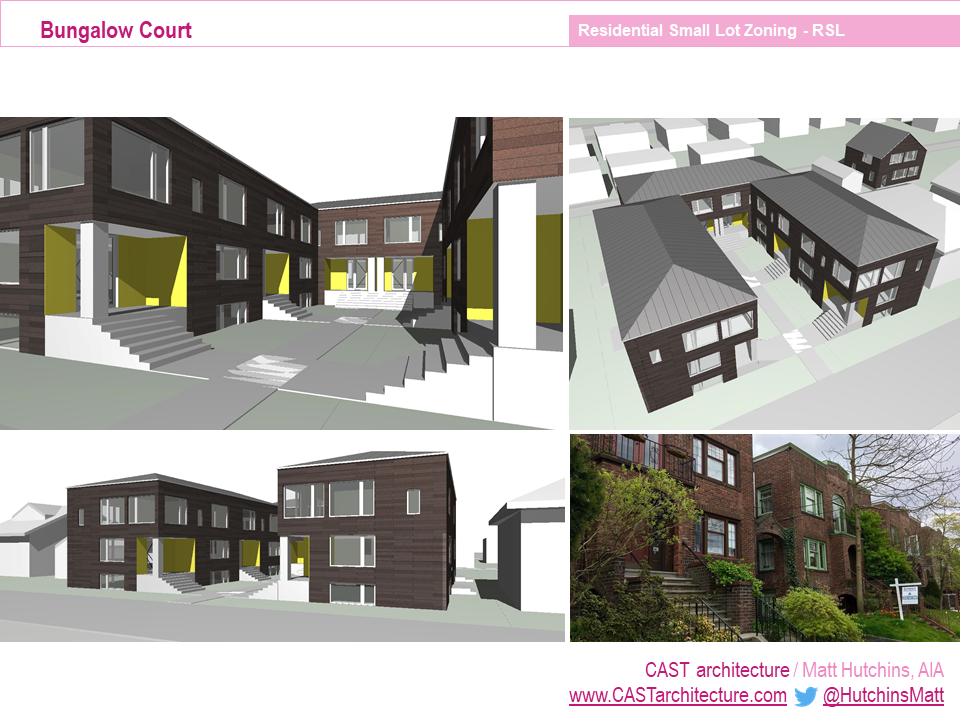
Bungalow Court (or the Walk Up Model) 
Slide17.PNG

For lots greater than 11,699 sq.ft, this bungalow court has (6) 3BR 1466 sq.ft. primary units, and (6) 733 sq.ft. 1 or 2BR ADUs.  This walk up is really a module that can be arranged into twos, threes, any grouping based on density limitations. 

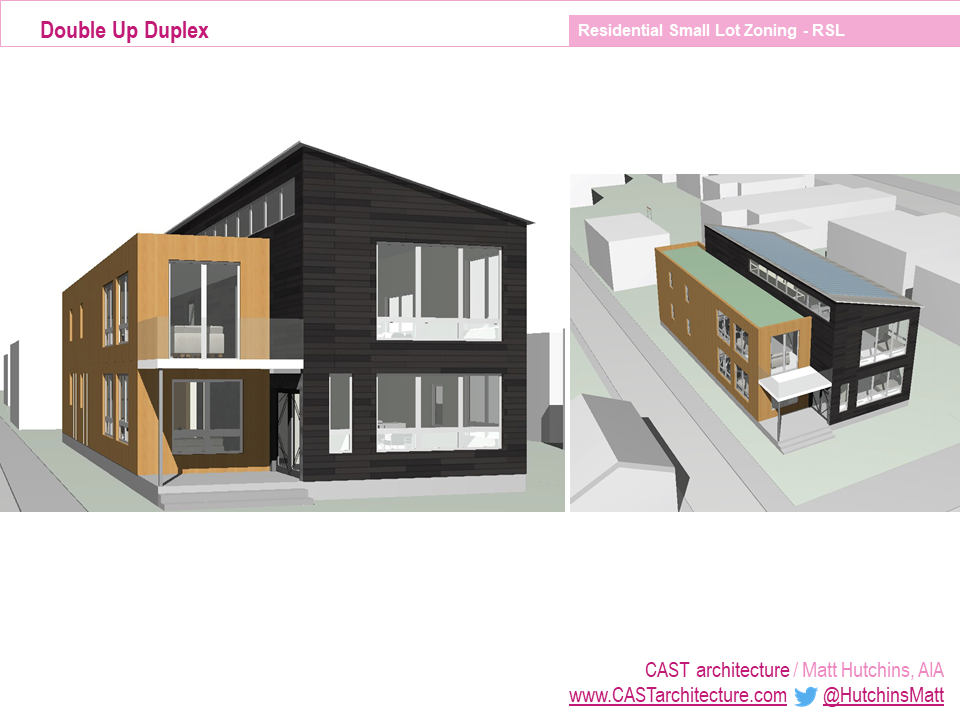
Double Up Duplex
Slide15.PNG

Our idea is for a stacked duplex, 1500 sq.ft. configured for an ADU, optimized for the allowable FAR on a minimum 4000 sq.ft. lot. We'd target Passivhaus green building standard, integrate green roof, pv, and rainwater catchment.  
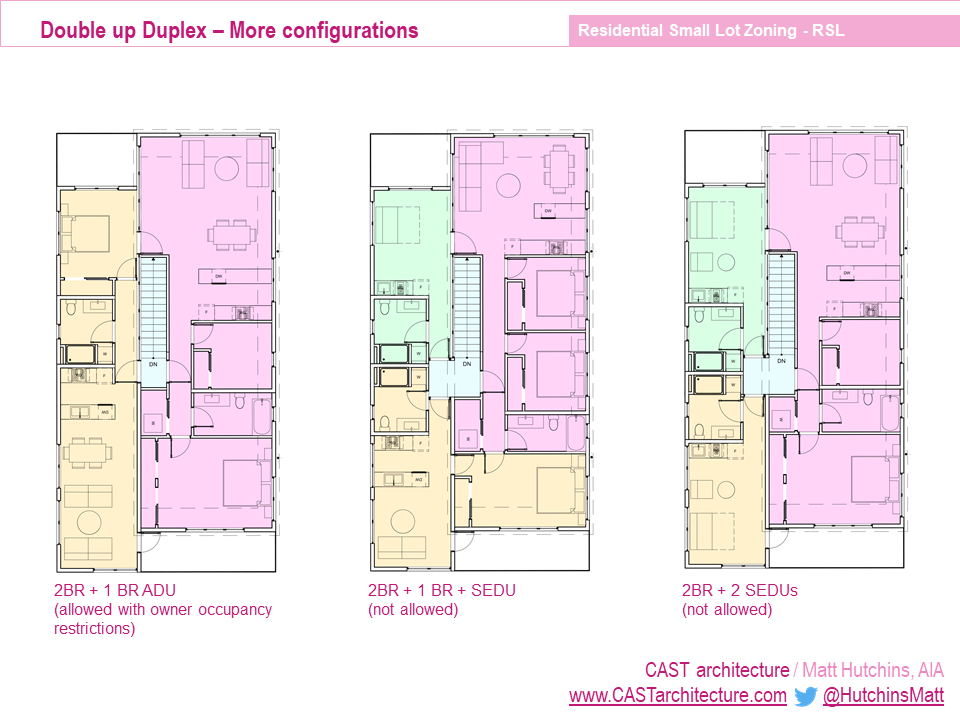
Alternative configurations for ADUs, or future co-housing options. 

Alternative configurations for ADUs, or future co-housing options. 

Recommendations for code tweaks!

Here are fourteen ways we can improve the Seattle’s MHA’s totally rewritten Residential Small Lot zone, BEFORE it goes into effect:

1.Exempt RSL from MHA fees. New dwellings created in the RSL zone will be subject to MHA, but will anyone built a rent restricted house? No. Therefore, fees due at permit issuance could be as high as $45,650. It will have a dampening effect on any homeowner looking to build a second house on the back of their lot. Many of those homeowners will build an ADU instead (not subject to MHA fee), eliminating the upside of more smaller homes in the marketplace. 


2. Allow ADUs to function as MHA performance! MHA performance is 50% for lots under 5699 sq. ft.. Meanwhile ADUs are by definition limited to a smaller size, and making them affordable would be closer in spirit to the original intent of the ordinance.

3. Eliminate new Maximum Net Unit Area limit. Maximum Net Unit Area is a new, unique limitation that only applies to this zone, and nowhere else. It is Floor Area per Unit, and it is often in conflict with the Floor Area Ratio (FAR) for the parcel. There are no MNUA exceptions for existing houses or additions, meaning many of Seattle’s classic bungalows in RSL zones will suddenly become non-conforming, unable to do a ‘bump out’ or even a SECOND story addition. Because basements count toward MNUA, but not FAR, expect a lot of new buildings with basements apartments. 

A basic RSL block reveals surprising inflexibility unless you want to add a second dwelling
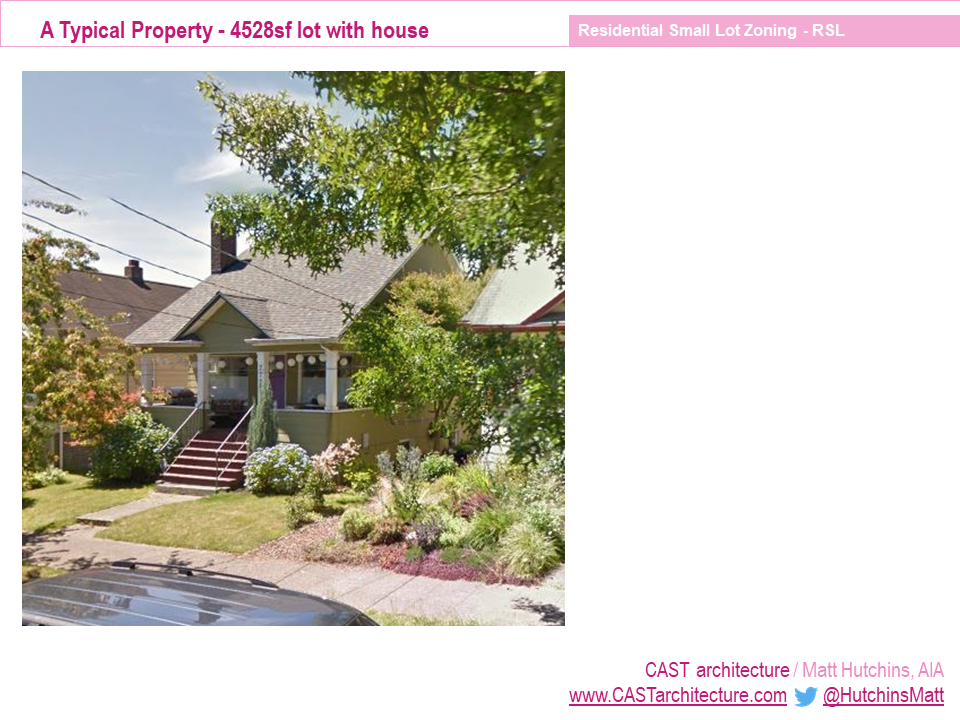
A basic RSL block reveals surprising inflexibility unless you want to add a second dwelling

The owners could only do a 230 sq. ft. addition. Not a second story. They could however build a new dwelling behind it up to 2200 sq. ft.

The owners could only do a 230 sq. ft. addition. Not a second story. They could however build a new dwelling behind it up to 2200 sq. ft.

4. Start FAR at 1, give .25 bonus for more dwellings. The FAR is .75, lower than any Low Rise zone, and effectively lower than Single Family zoning (only governed by height and lot coverage). If RSL is meant as a transition between multifamily and single family, it is more restrictive that both.

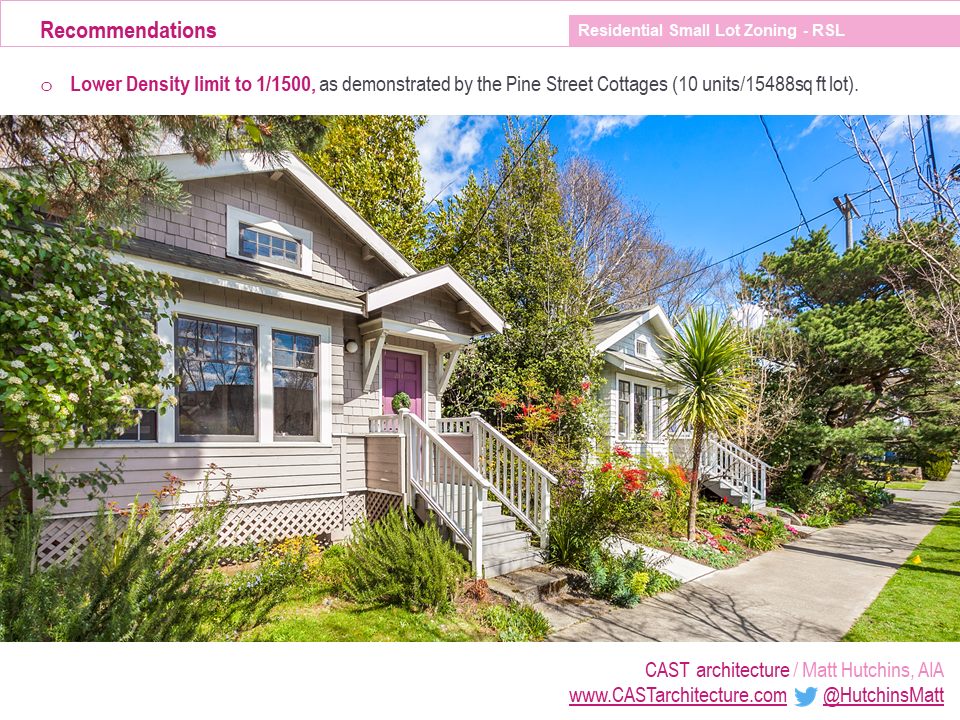
5. Lower the density ratio to 1 to 1500. Fourteen percent of the newly minted RSL lots will not even support a second dwelling. Why go through this process then wipe the development capacity of 900 lots off the table? Rounding up for density at 1.85 * 2000SF means any lot under 3699SF is still a single family lot, but MNUA effectively limits all dwellings to an FAR as low as of .59.
Slide18.PNG


6. Allow more than one Accessory Dwelling Unit (ADU). All these lots are in urban centers, where we are planning to put almost all our growing population. Many lots or owners aren’t going to want to built a full second dwelling. Meanwhile, SFZ will soon allow two ADUs per primary residence. This flexibility will preserve many existing houses, and provide homes for new residents right in the urban villages.

7. Exclude ADUs from MNUA. An accessory dwelling unit counts against the MNUA, meaning many average houses wouldn’t be able to build a cottage without sacrificing square footage in the primary house.

8. Resist the urge to Design Standard. The two Design Standards for RSL are ridiculous. Different color walkways to the house in back? Why? We don’t expect such ham fisted wayfinding in multifamily zones where there’s likely more front doors. One of the great strengths of the proposed code is that it did away with the many of the restrictive types, like ‘tandem housing.’ Let’s not dilute it with well meaning micro management, only to find out that we’ve created a less than graceful solution (remember the platypus!).

9. Allow exceptions from MHA when preserving existing houses. Subdividing existing houses into multiple units will be penalized by the Design Standards, and be subject MHA fee, at the full price for the area of units. The MHA fee calculation is gloss floor area/total units X net increase of units. A 3000 sq ft house, converted into a triplex from single family, would pay MHA on 2000 sq ft as if new, or up to $41,000. That neither incentivizes preservation or the creation of more affordable housing. 
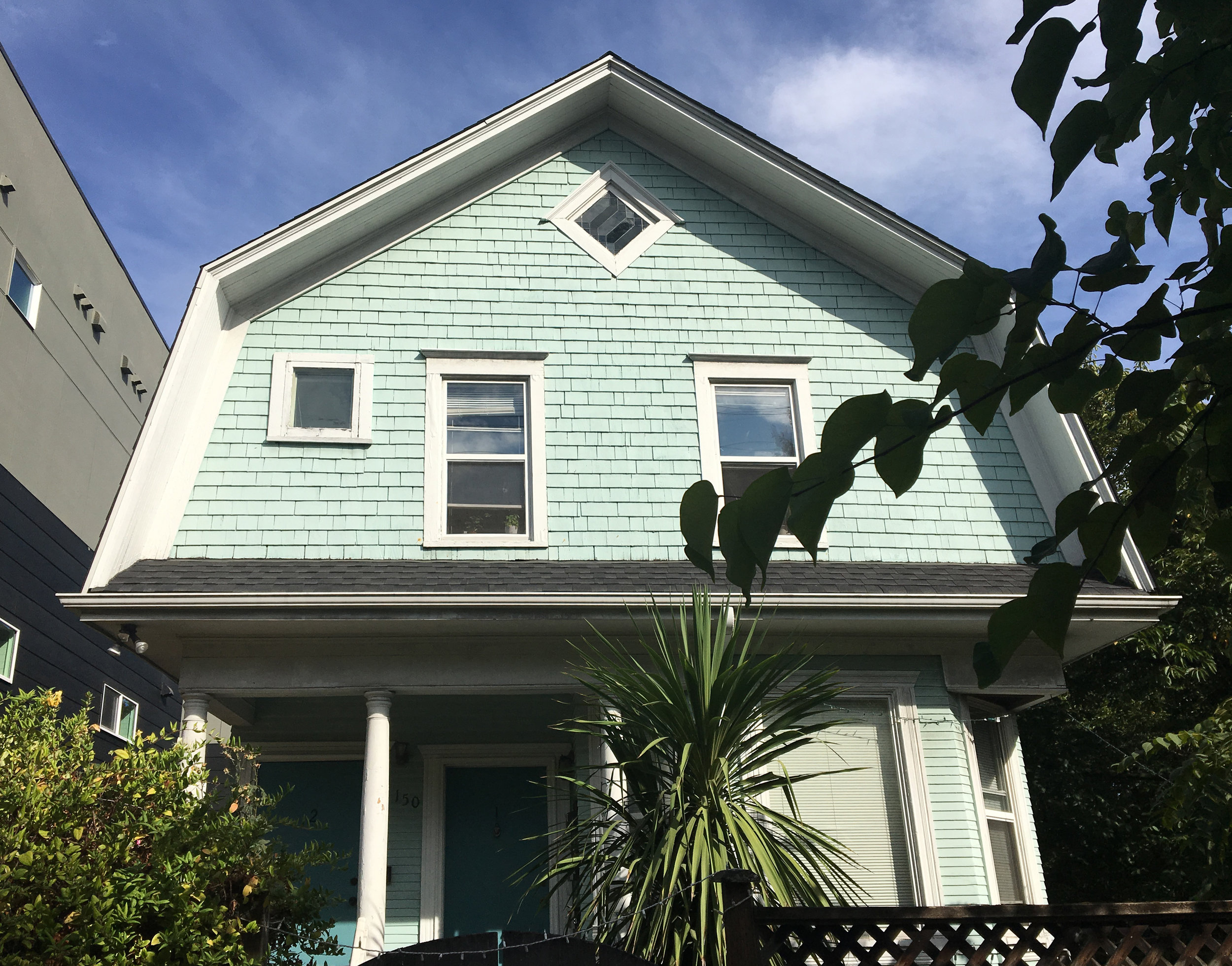
This is a triplex.  Converting it under the MHA regime would cost tens of thousands of dollars in MHA fees in addition to the requirements of retrofitting.

This is a triplex.  Converting it under the MHA regime would cost tens of thousands of dollars in MHA fees in addition to the requirements of retrofitting.


10.Take out limit on number of apartments. The stigma of apartment living results in one of the most efficient (and revered) forms being outlawed. The code is clear: RSL outright outlaws more than three apartments regardless of lot size. No cute Capitol Hill fourplexes.

This fourplex is not allowed under the new RSL zone. 

This fourplex is not allowed under the new RSL zone. 

11. Eliminate owner occupancy requirements. We don’t require owners to live on site in other multifamily zones, owner occupancy requirements will severely limit the number of accessory dwelling units and they reinforce a fundamentally class based stigma against renters.

12. Change all residential zones to ‘Residential’. We now have three titles for zones where residences are the only use; Single Family, Lowrise, Residential Small Lot. While RSL is being treated as a unique bridge between SFZ and LRZ, it should be part of a continuum of dwelling per square foot. Streamline!

13. Amend Seattle Residential Code to cover up to four apartments. Building codes switch to the more demanding SBC for anything more dense than a duplex and ADUs are considered as such. When buildings should be getting more efficient, like stacking a third apartment on top of a double decker, there is a quantum leap in construction cost, driven by code compliance.

14. Allow Live Work and Corner stores. In midrise zones, having residential suites at the street level seems forced. Two blocks from the center of an urban village, having an office space legible from the street makes total sense. Allowing corner stores would expand the walkshed so more people will walk to pick something up, rather than drive to a supermarket.
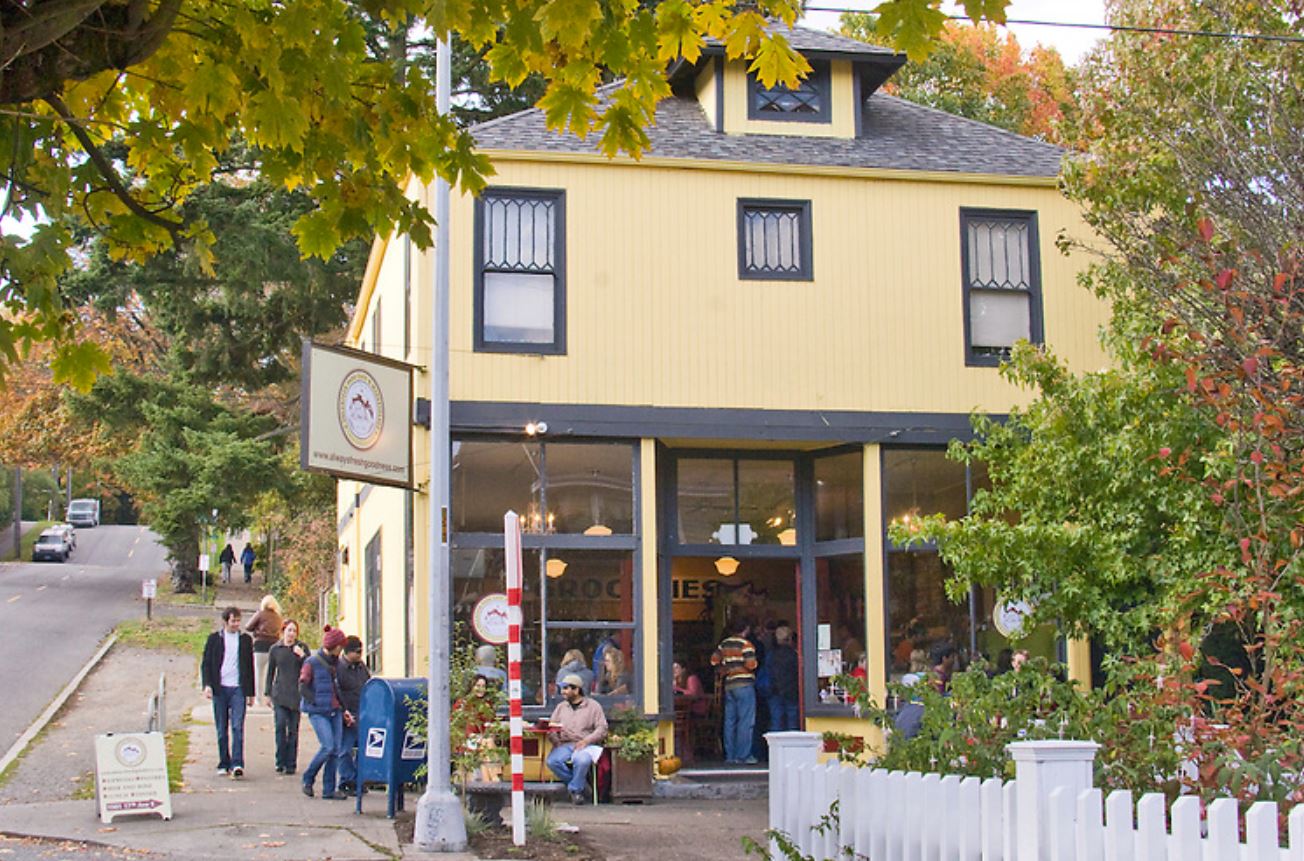
Neighborhood institutions start with entrepreneurial neighbors. Give them a place.

Neighborhood institutions start with entrepreneurial neighbors. Give them a place.

Urban Agriculture and Organic Architecture
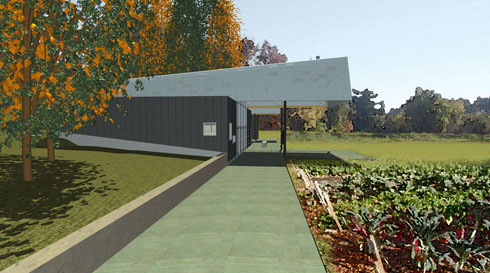
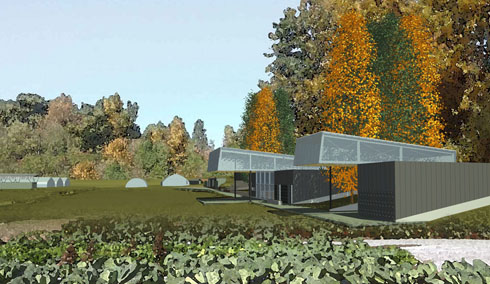
RBUFW Classroom building, view looking south from the entry path (architectural rendering)

RBUFW Classroom Building

We've been on an intense push the last few weeks to develop a schematic design for the new Classroom Building at the Rainier Beach Urban Farm and Wetlands (RBUFW). We're incredibly excited that Seattle Parks and Seattle Tilth were able to compress a two-phase master plan into a single project, but the result has been a very aggressive schedule for the design phase!

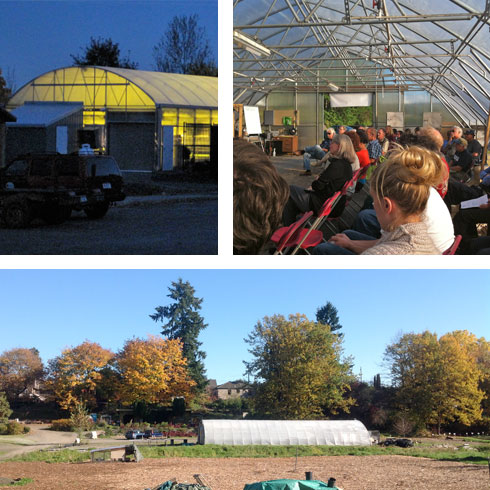
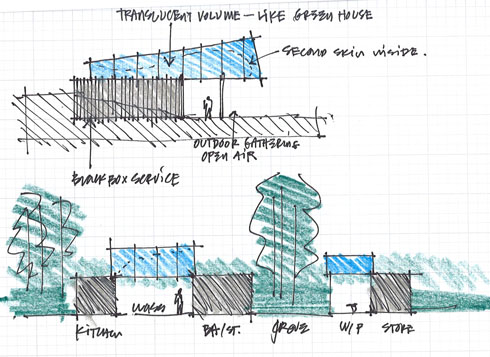
For  inspiration, we've been looking at pragmatic agricultural structures, both the simple closed forms of storage sheds and more "prismatic" shapes of greenhouses and barns. Greenhouses are particularly intriguing in the way the inside reveals a complicated structure and interior volume that is barely suggested by their taut and simple exterior form.

Greenhouse interior & exterior images

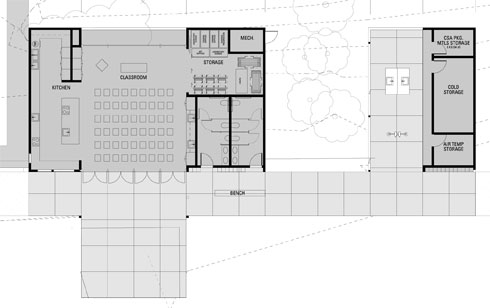
Sited to preserve the maximum agricultural land, the Classroom Building is nestled into a hillside along the east edge of the property. Three closed "boxes" containing support functions are slotted into the hillside, with the open space between accommodating the classroom and a grove of existing trees.

RBUFW Classroom Building Floor Plan

Above the boxes, a pair of elevated canopies create the primary function spaces and extend out over the pathway to provide plenty of covered outdoor space.
Image
Image
RBUFW Classroom Building, view from the SW (architectural rendering)

From the outside, these canopies appear as simple translucent volumes, but the inside reveals vaulted space, filtered sunlight and expressive structure. We've taken inspiration from architects such as MW Works and VJAA who accept the construction techniques of industrial space-making, but turn around and use those conventional materials in a very refined and thoughtful manner.

RBUFW classroom building, view under main porch (architectural rendering)
RBUFW classroom building, interior view (architectural rendering)

THANKS TO ALL THE VOLUNTEERS AT THE SPE EARTH DAY EVENT!
IMG_4149

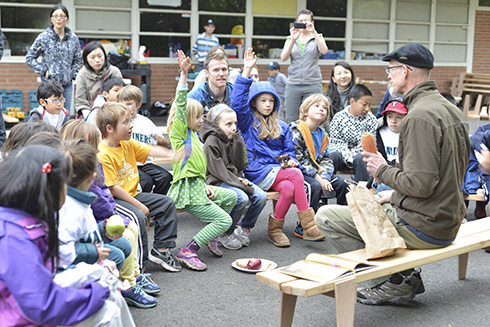
We had a fantastic turn out for the Sand Point ElementaryEarth-day work party this past weekend. A special thanks to Loren Yaguchi and all the folks from Abbott Construction's special projects group for donating materials, shop time, and a whole lot of can do to make the benches we designed become a fantastic kit of parts for the community to assemble!

DSC_2683

30 new stacking benches for the outdoor classroom fully assembled - a testament to the prep of the folks a Abbott Construction and all the volunteers who turned out to work on our local public school!

DSC_2765

Thank you to Carter Capps, pitcher for the Seattle Mariners and Taylor Graham, defender for the Sounders FC for signing autographs and helping with our projects!

DSC_2641 copy

Richard Swann author of “Our School Garden” putting the newly assembled benches for the outdoor classroom to good use!

DSC_2711

ANDERSON RESIDENCE - GREEN HOME TOUR April 27th

1

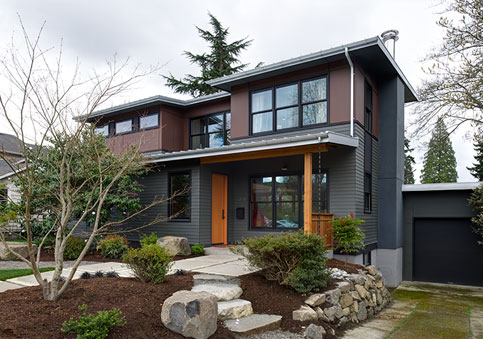
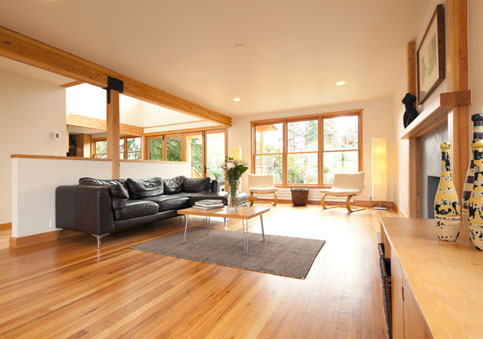
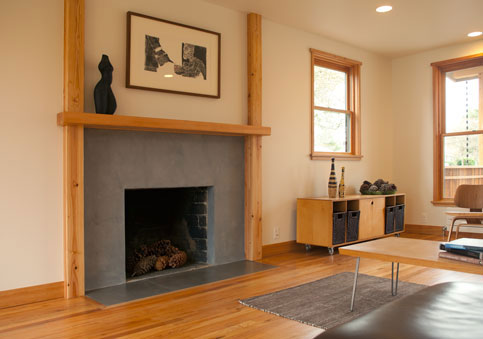
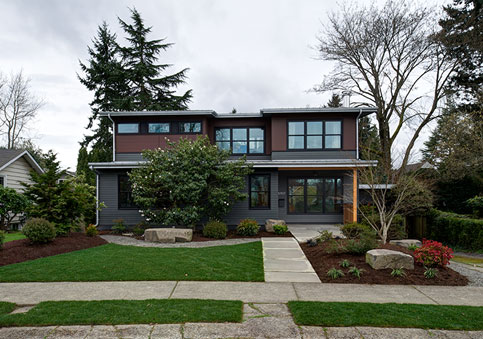
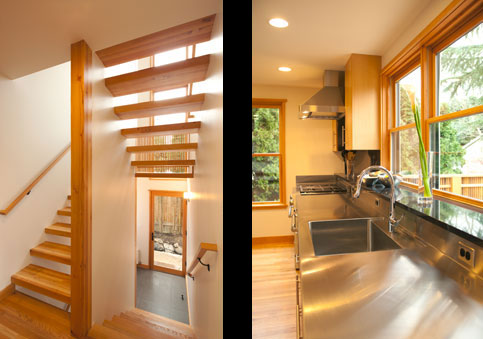
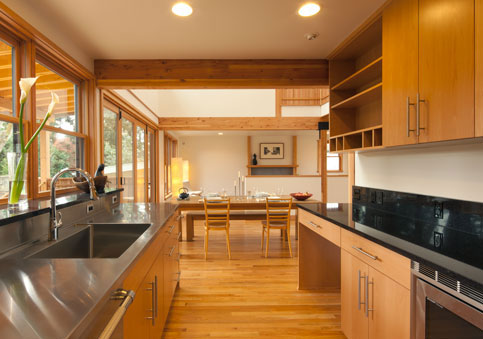
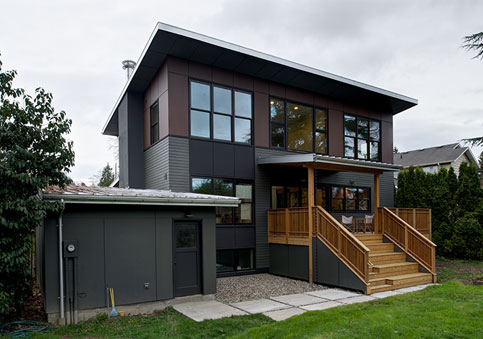
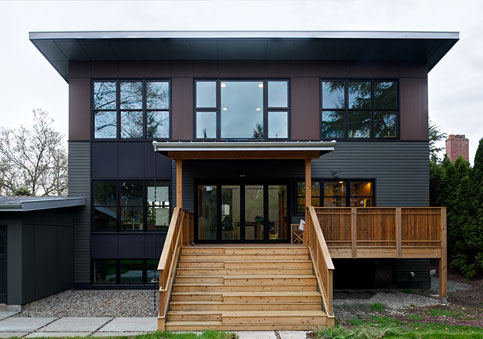
Mark your calendars! The Andersons Residence, a 4 star Built Green home, will be open to the public for touring as part of Northwest Eco Building Guild Green Home Tour on April 27th.

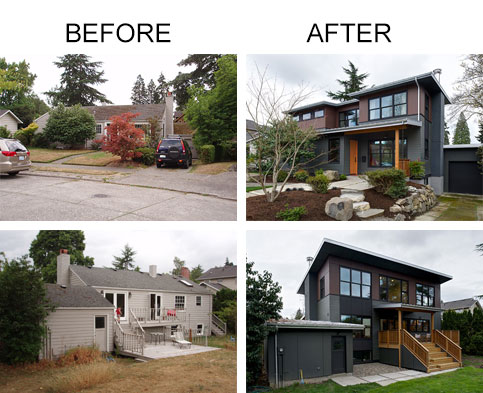
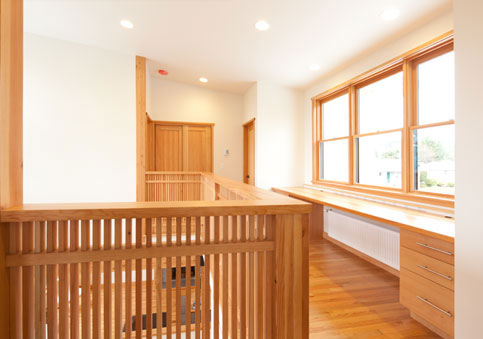
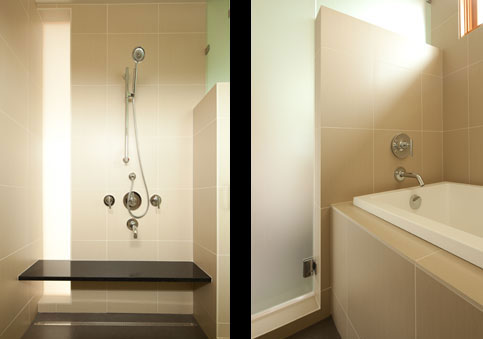
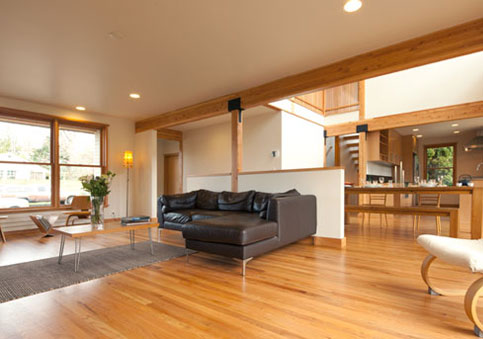
The Anderson residence is a Built Green renovation, addition and transformation of an existing single family home. The plan opened, simplified and streamlined the existing first floor in addition to adding a new second story to provide much needed space for a growing family.

BEFORE-AFTER

3 4

2

5 6 7 8 9 10 11 12 13 14

Rainier Beach Urban Farm--Community Meeting

If you are interested in urban agriculture and would like to share your ideas to shape the Rainier Beach Urban Farm, please join us Saturday, July 28th from 11:00 am to 12:30 pm for an open event to discuss the project!  Stay for the community picnic or just get your hands dirty during the drop-in work party every Saturday from 10 am to 3 pm.


Rainier Beach Urban Farm

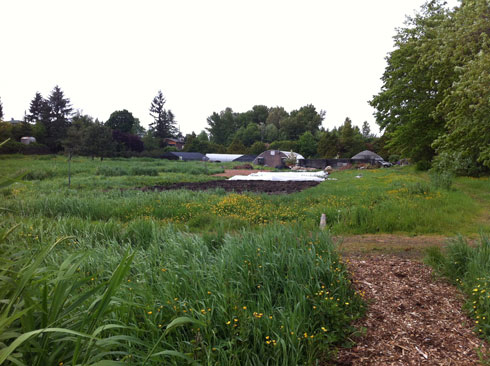
In collaboration with Seattle Tilth, the Friends of R.B.U.F.W., and the Berger Partnership, CAST will be designing an urban farm in Seattle.  The site is a former municipal nursery in Rainier Beach--10 acres of mostly wetland with some hoop houses at the north end.  We'll be undertaking the challenge to not only make a model for urban agriculture, we'll also be greatly increasing the ecological function of the wetlands.

This project is in one of the most diverse zip codes in the nation, and we'll be involving the community to shape the design, as well as creating facilities for small scale commercial farmers, entrepreneurs, and other programs such as Seattle Youth Garden Works.  The hope is to make a community hub centered on growing and sharing food.

The first community design meeting is June 19th on site (time TBD).  Please come and share your vision with us!

Urban Intervention at the Seattle Center-- a vision for the next fifty years

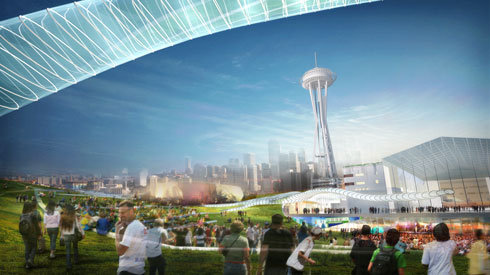
In collaboration with the Berger Partnership ,Via Architecture, and Rushing, we put together a competition proposal for the replacement of Memorial Stadium and a new vision for the Center as a whole.

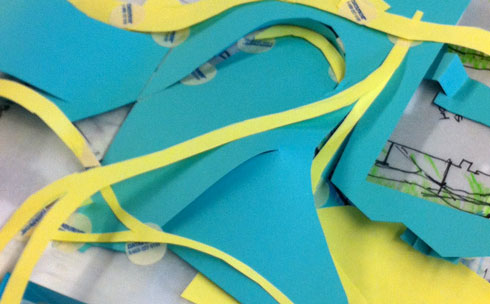
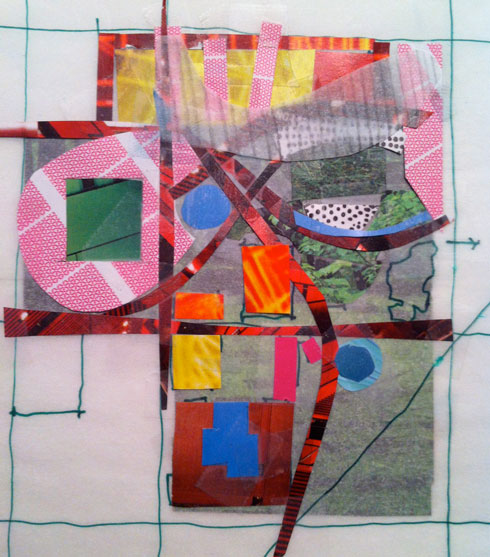
The design is an organic and topographic intervention that flows through the Center and surrounding neighborhoods, creating new connections, opportunities for new programs, and experiences at the Center. It creates a dense, flexible fabric stitched together with multi-modal transit to bring in new audiences, local/daily users, and new amenities for regional visitors.

Some of the important features:

Connectivity:

Right now the Center acts as an island in the city, but should be a hub linking neighborhoods rather than separating them. To that end, we're showing a linkage through the Bay to Lake trail, a transit center with bus, Rapid Ride, sub grade parking, and a new loop of the streetcar. The northern edge, bounded by Mercer will have a new lid park to bring in foot/bike traffic from Queen Anne and a plaza at the corner of Mercer and 5th. Broad Street becomes a greenway linking to SAM Sculpture Park to Lake Union. In effect, it's location makes it an ideal 'transit oriented park' to draw Seattleites to and through the Center.

Layered landscape:

The new topography defines the Center Green, an organic open space at the heart that spills out in all directions. Memorial Stadium is replaced by a field with a 'kop' style hill as seating, perfect for multi-use such as a musical performance space.  From 5th, the landscape opens up for a vista to the International Fountain. Underneath the Center Green, we have a series of public event spaces, storefronts for fringe/alternative cultural institutions to colocate and share resources, layers of parking, and finally a grid of ground source heat pumps to lessen energy use for the Center overall.
We didn't stop at the boundaries of the original 9 acre site, but extended the idea to carve out new access from Uptown and the meandering pathways that run through the Center Green terminate at a bridge to the apex of Key Arena--a great new public view point to downtown and the Sound.

Expressive Environmental Infrastructure:

Beyond Seattle 2030, the design begins to illustrate the path toward making the world's first Living Building District. The goal is to create a beneficial closed loop system for using on site resources and expressing the infrastructure so visitors can see, understand, and take the lessons of sustainability home. Floating above the landscape, there is a layer of solar canopy (about 150K SF) to generate energy for the spaces on the 9 acre site. We also did a first pass on other locations for solar throughout the Center, and could easily add twice that amount on existing roofs and walls of other center buildings. The draped landscape collects storm water and purifies it through a series of rain gardens and native landscape.
The Center as a cultural incubator:

We're also proposing a mix of new, smaller multi use spaces to support the growth of new cultural generators, like SIFF and KEXP.  Tucked under the knoll overlooking the performance/field, we are proposing a new multi-use performance/community space which can be configured like the Center's Northwest Rooms or opened up for larger events. At the corner of Mercer and 5th, we've opened up a new urban plaza that acts as both a local Queen Anne gateway and spill out space for the community space and cultural incubators.

Although we were not selected as a finalist for the competition, I think we put together a very forward looking, connective, and sustainable solution which would do the city proud.

Special thanks to Studio 216 for the help with the renderings!

Seattle Center Urban Intervention competition-sneak peak

Soon we'll be able to post our design concept for the revitalization of the Seattle Center, as part of the Urban Intervention competition, but here is a little sneak peak:

Once they announce the finalists, we'll be able to release the full content of our proposal, as well and give full credit to all the great collaborators we worked with.


Urban Olympic reboot

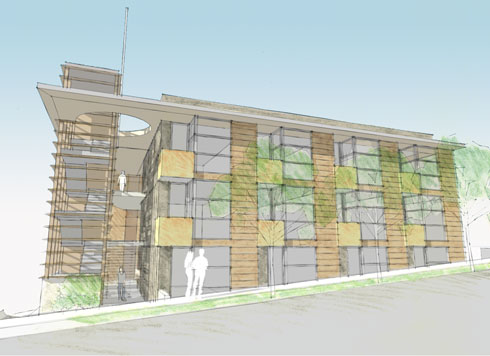
We've been investigating what the Urban Olympic project would look like as an 27 unit apartment building.  One potentially excited twist on the building is that we have split the bulk into two volumes with a 18' wide courtyard atrium.  The atrium and circulation are exterior, so we can apply another 2000 S.F.for an extra 3 units and still come in under the FAR limit.

We also did a first run at some energy modeling, using Archicad's EcoDesigner program, and feel that given the bulk it would be fairly straight forward to achieve the Passive House standard, but the return on investment is better if we design to the envelop to Washington State Energy Code, add solar hot water, switch the lighting to LEDs, and add an ERV.