
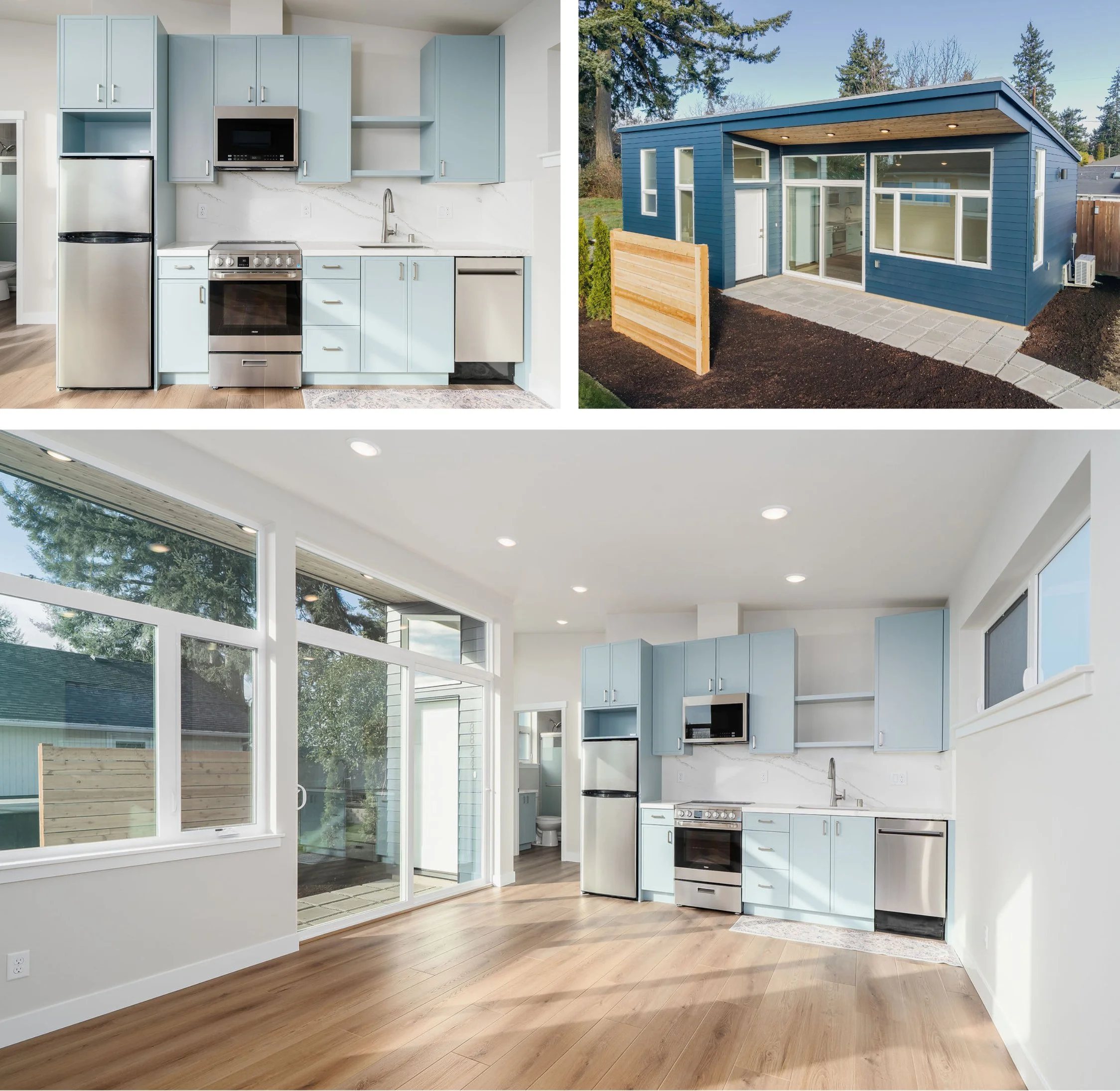
A newly completed pre-approved Cedar Cottage, built by Waltier Homes. This 467 square foot DADU (Detached Accessory Dwelling Unit) is home for grandparents on multigenerational property.
DADUs are transforming the housing landscape in urban areas. These self-contained small homes can be attached or stand-alone and are becoming increasingly popular in cities grappling with housing shortages, rising costs, and shifting lifestyle preferences.
As one of the region's leading voices for abundant and affordable housing choices, CAST has advocated for backyard cottages—accessory dwelling units (ADUs)—since Seattle first considered them citywide in 2009, and our Cedar Cottage is pre-approved by the City of Seattle.
We want as many people as possible to benefit from a mix of housing options.
More efficient land use is critical to address our housing crisis, climate change, and persistent inequities in access to housing opportunities. Modest infill housing, such as ADUs, are a key strategy to empower citizens to provide new housing, build generational wealth, and leverage taxpayers’ investment in infrastructure, transit, schools, and parks.
RESOURCES
City of Seattle ADUniverse
CASTcottages.com
ADUs and DADUs
Help Housing Shortages
The surge in demand for housing has put significant pressure on urban neighborhoods, where space is limited, and housing affordability is a critical issue. ADUs and DADUs offer a practical solution by increasing the housing stock within existing neighborhoods.
Affordability + Flexibility
ADUs and DADUs provide an affordable alternative for renters and homeowners alike. Homeowners can use these units as rental properties, offering housing at a lower cost than traditional apartment units. They can also serve as multi-generational living spaces, allowing families to stay connected while maintaining privacy. For many, ADUs are a way to downsize without leaving their neighborhoods, contributing to economic diversity in communities.
Ease Zoning Regulations
Cities across the US are revising zoning laws to encourage the construction of ADUs and DADUs. These policy changes make it easier for homeowners to build these units by reducing permitting costs, relaxing parking requirements, and increasing maximum allowable sizes. In Seattle, for example, pre-approved DADU plans streamline the process, saving time and money for homeowners.
Sustainability
These small homes align with urban densification goals. By utilizing existing infrastructure and minimizing the need for new developments, these homes help reduce urban sprawl. Additionally, their smaller size typically results in lower energy consumption.
Enhance Community Character
Thoughtfully designed DADUs can blend seamlessly into existing architectural styles, adding diversity to the housing stock while preserving the integrity of the neighborhood.
📸 Northlight Stills & Motion


