Posts in Sustainability
10x10x10 Green Building Slam wrap up

The Guild gathers to honor innovative projects

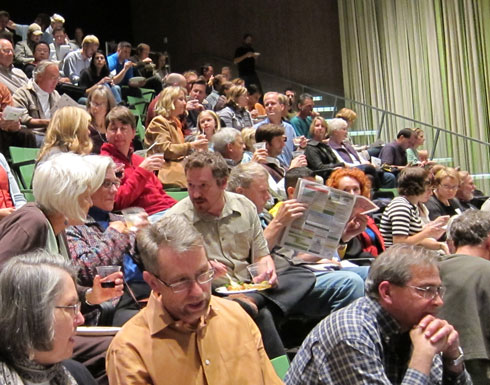
Friday's nights Green Building Slam was a big success. The Guild packed the auditorium in the Central Library and was, dare I say, raucous?  There was a lot of energy in the room and the enthusiasm was palpable.  I wanted to highlight a couple of trends that we saw in multiple projects.
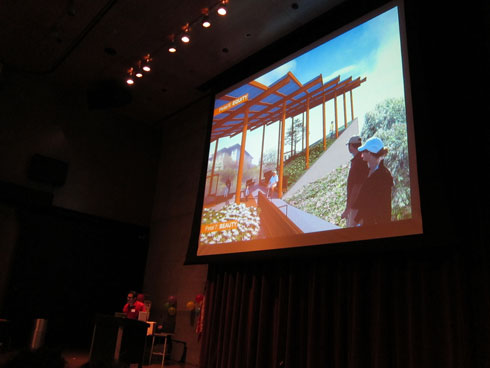
Matt presenting the Sunset Substation Park

1.  Passive houses--super insulated, airtight buildings that consequently use very little energy to heat (a hair dryer or toaster would do the trick).

Projects ranged from Joe Giampietro's Mini B house , Jim Burton's Backyard Box, and Dan Whitmore's house.  There are a lot of people working on the details, and trying out innovative strategies for meeting the rigorous standards, like the .6 air changes per hour (Joe's was .58ACH and Dan's measured .41 ACH).  Here is a blog about passive houses--Existing Resources.

2.  Beyond Passive Houses specifically, there was a drive for measuring building performance using blower door tests, thermal imaging, etc.  The point was made  that the real time feedback is a great learning and teaching tool for both the designers and the craftspeople, linking the attention to detail required at all phases of construction to execute a high performance building with regards to energy usage.

3.  Waste stream minimization:

Two projects highlighted efforts to reduce construction waste: Bastyr University housing, and Walsh Construction's Salishan redevelopment.  The Salishan project was especially notable, not only for the context, an affordable housing project with upwards of 100 units, but because they put in place a system of labled dumpsters to sort all the construction waste--down to just one unrecyclable dumpster load over the project's construction.

I had a great time, first presenting the Sunset Substation Park, and second, learning about what other like minded companies are working on in our region.
CAST presenting at the NW Ecobuilding Guild's 10X10X10

I'll be presenting the Sunset Substation Park to the NW Ecobuilding Guild at their annual "green building slam," 10x10x10. It's "a high-energy introduction to ten cutting-edge sustainable building projects in and around Seattle...featuring fast-paced presentations by the region's leading green builders and delicious food and drink."

This marks our second year in a row presenting (last year, we showed off the Fremont Townhomes)!

Current Events

We're busy, and that is news in an of itself.  Not that we haven't been keeping busy over the last year and half since the big crash, but given the abysmal state of the construction industry as a whole, we're happy to report that anecdotally there seems to be more activity out there (knock on wood). More housing starts, sales, news in the Daily Journal of Commerce about other firms hiring, and some of those holes in the ground out there starting to see renewed activity. So what have we been working on?

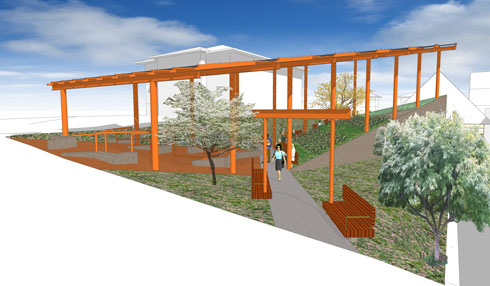
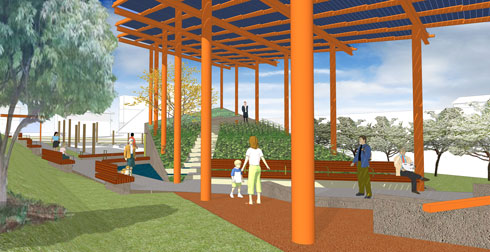
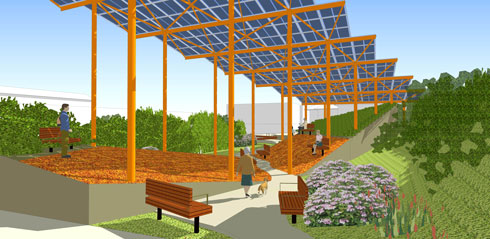
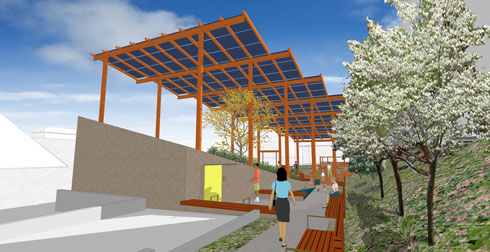
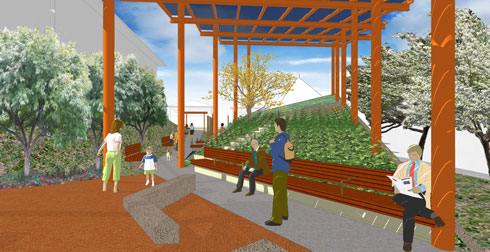
First, check out the latest schemes for the Sunset Substation pocket park in Ballard.  We've made a hybrid scheme out of the three prior options, increased the potential of the solar array, and reworked the parkscape with a more sculptural land forms and a sinuous path from corner to corner:

sunset substation

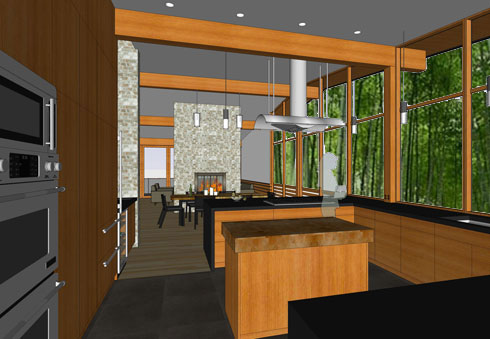
We've also been working on a great remodel/addition in Laurelhurst, opening up a classic midcentury modern house. There is a timber bamboo grove and small park to the north, creating an intimate feeling for the new kitchen and dining room despite the expanse of glass:

laurelhurst midcentury renovation

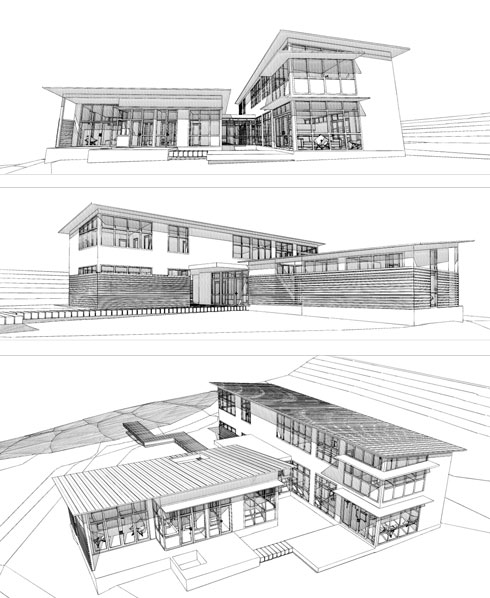
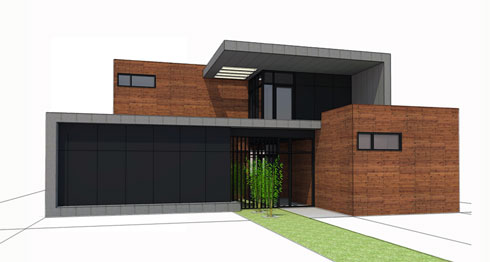
And we're making some progress on the Mitate House. I'm excited that as the design has been refined, we're getting more elegant volumes, a clean functional plan and expanding the opportunities for interaction with the landscape.  I'll be posting more shortly on this one--we're getting the renderings ready for the builder's pre-sale marketing and will highlight the sustainable construction aspects:

Mitate House-3 views of a NW contemporary house

Plus we're working on a live/work in Fremont, renovations in Ballard, Sand Point, Montlake, Capital Hill, a restaurant, 2 backyard cottages, to name a few, and I'll feature some more projects this month.

Sunset Substation Update: Can we meet the Living Building Challenge?

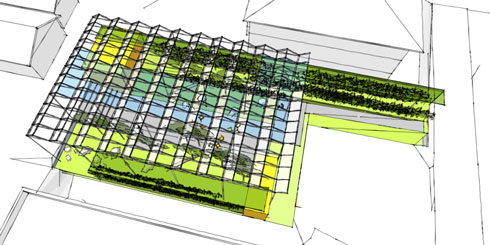
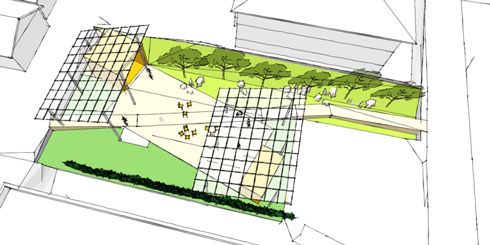
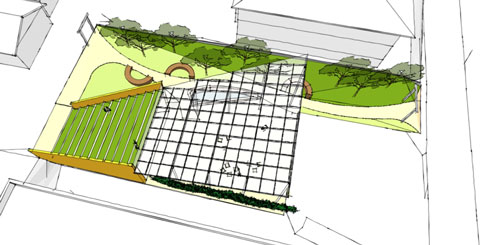
We've done our first presentation of three ideas for the Sunset Substation Park.  More information about the three schemes are here, here, and here. 'BIG ROOF' SCHEME

'PAIR' SCHEME

'WEDGE' SCHEME

The solar component of this park will produce between 20 kW and 30kW, and provide power for the community multipurpose space, and an emergency relief center.

We're looking at meeting the Living Building Challenge, the highest standard for sustainable construction.  It would be a major undertaking, since there are less than a hundred structures in the world currently attempting to meet this challenge, but we have a lot of things going for us at this scale of project.  As the project develops, I'll keeping posting information on the Challenge--how it is affecting the design, and the costs.

Current events

New spec house in Issaquah Highlands We've completed the first community design workshop for the Sunset Substation pocket park and we've started a blog for the project at www.SunsetSubstation.org.  The results of the workshop are posted here and you can read a write up from the Ballard News tribune here and another article from KOMO's neighborhood blog here. Now that we have some community input, we can start shaping their unique goals for bringing solar power generation and community space together.
In other news, Stefan is working through designing a micro-hydroelectric generation station for an eco-retreat/outdoor recreation center and meditation retreat in Colorado, and should be posting an introduction to the project and more information about micro-hydro.  Suddenly, we have a lot of projects which have some active or passive alternative energy components--very exciting stuff.

Tim is leading the charge on backyard cottages.  We have two custom cottages currently in design, and another design which will be available as a prefab.  We're finalizing the pricing, so we will have a more comprehensive information available soon.

We're also working with a homebuilder  to develop a series of spec homes bases on a fusion of asian design, modern spaces and out of the norm materials (see image above).  We're especially excited because the house's function emphasizes a series of landscapes integrated into living spaces, so we'll have courtyards, pocket gardens, and salad gardens for growing your own vegetables off the kitchen.  Our big presentation is on Tuesday so I'll post the schematic renderings afterwards.

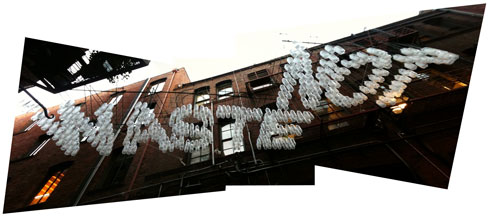
Finally, this is the last weekend to see our WASTE NOT installation in the alley east of First Avenue, south of Occidental Park.  Anyone need 2500 2 liter bottles?

The Sunset Substation: a new pocket park for Seattle

We are very excited to begin a new project for the Sunset Hill neighborhood to transform an abandoned City Light substation parcel into a pocket park.  Based on the input from the community thus far, the program is very intriguing:  a community space with an artist-in-residence caretaker, powered by a serious photovoltaic array. There may be more or different elements as the project evolves in the community design process, and as we navigate through various City agencies and funding sources, but fundamentally this has all the values we expound as a firm:  sustainable building, energized public space, housing options/density, and  an interactive process that invests people in the civic life of their neighborhood.

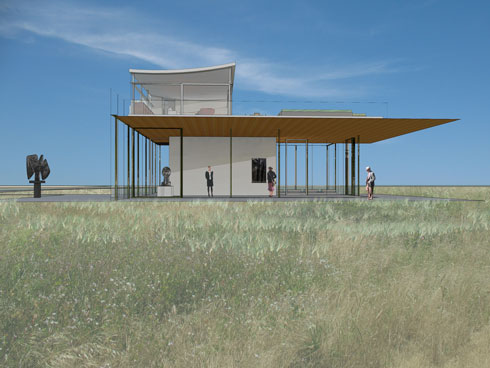
In 2008, I designed a structure with a similar program for a Dwell Magazine conceptual competition:

Crissy Field House

Set at the east end of Crissy Field in San Francisco, this Community Room/Exhibit Hall creates an anchor for a new sculpture park. The hall is a multipurpose space, more infrastructure than building--for public events, private events, exhibits, etc. The glass sliding panels open the hall to the public, the park and the views of the Golden Gate Bridge.

A small caretaker's residence is situated on the second floor, using the broad roof of the Community Room as a vegetable garden, eliminating the conflict between the public park and the private residence. The glass screen walls provides security, and electricity--the design on the glass is created with a photovoltaic interlayer, which powers the house and hall. Stormwater is captured, stored and used to irrigate the roof garden.

While this little conceptual project may help to inform the Sunset Substation, I'm excited to apply some of this experience in designing a real world pocket park.

Stay tuned....

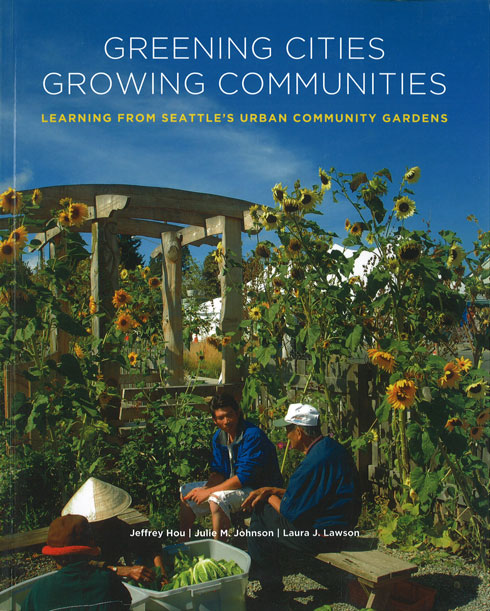
Interbay P-Patch published in new book

p-patch-book-cover We are very excited to see this survey of Seattle's urban community gardens, especially since the Interbay P-Patch is included as one of the case studies.  The P-Patch is one of my personal favorites because of the impact it has had in strengthening this vital community, and has been instrumental in showing other neighborhoods how to implement their own community garden.

Further, the P-Patch really showed us just how satisfying working on these small pro bono projects can be. Since the P-Patch, we'll donated about 5% of our yearly output to pro bono causes, including daycares, parks, and community centers and hope that we'll have more opportunities to help concerned citizen groups visualize and build a better city.

WASTE NOT--an installation in Pioneer Square Alley

alley The big opening is tonight from 5 to 9, between 1st and 2nd just south of Pioneer Square--
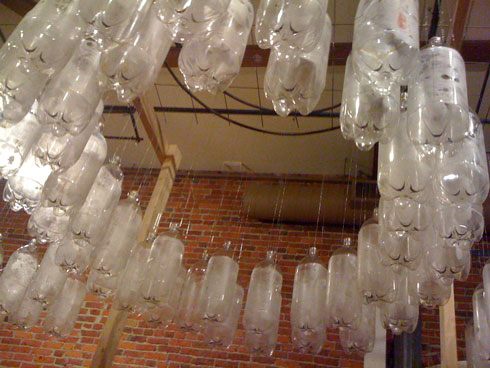
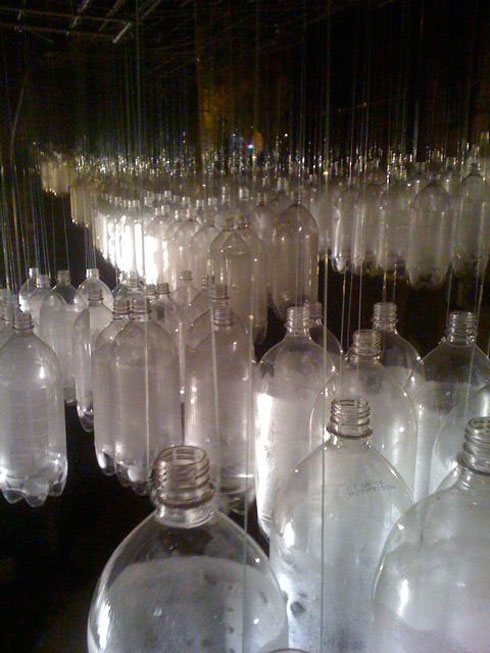
Yesterday we hoisted the installation in place. While we still have to do lighting, the impact is great! From the end of the alley, the installation looks like a lonely cloud hovering there, and only once you get beneath it can you see the message "WASTE NOT."

Nord Alley Party 5: Thursday November 3rd

alley installation--in process We are working on a collaborative art installation for the Nord Building's upcoming Alley Party, sponsored by two non-profits, Feet First and the International Sustainability Institute.
Feet First is an advocate for walkable communities, and ISI works on documenting global best practices for urban sustainability.  They have been working with their neighbors to transform alleys from nuisances to assets. Part of the program to invigorate the alleys as a vibrant urban places is their Alley Parties.  Each one incorporates art, music, food and drink to draw people into the alley and give people a different perspective on what they can become.

This Thursday, CAST, in collaboration with Christopher Ezzell of E Workshop, and Vashon Island artist Shahreyar Ataie,  will open an art installation that will float over their the Nord Building's section of alley, using about 600 recycled 2 liter bottles.   It will be up through the New Year.

So come one and all!  Did I mention there will be food, drink and music?

Alley between 1st and Second, just South of Occidential Park

314 First Avenue

November 3rd,  from 5 pm to 9 pm

BLOGGING A SEATTLE BACKYARD COTTAGE - a CAST architecture case study project

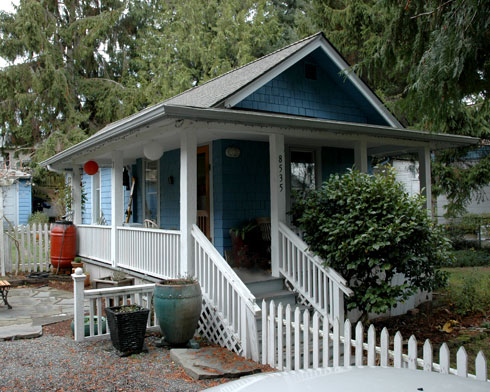
house Greenwood resident Kate Lichtenstein contacted us last spring to help her design a backyard studio / guest house for her modest 650 square foot 1920's one bedroom home (shown above). While the home's scale fits nicely with Kate's desire to have a simple and ecologically responsible lifestyle it falls a little short when it comes to a rough and ready workshop space for art, bicycle repair, ski tuning and building projects. Kate's home also lacks the space for a home office / guest room - something that she would like to integrate into the new structure.
Our initial goal was to have her project under construction by late summer 2009 but we were unable to get the project off the ground by that time. In hindsight, the stalling of the project turned out to be a stroke of luck...

In March of 2009 Seattle Mayor Greg Nickels proposed legislation that would allow Seattle homeowners to construct backyard cottages on their property. The legislation was reviewed and ultimately passed by the Seattle city council on November 2nd 2009 (with a 9 to 0 vote too! Kudos to Seattle voters for electing progressive urbanists for city council members!).

For Kate the ordinance has opened up new possibilities for a structure that can both accommodate her current needs and provide a potential source of income as a rental unit if her finances ever fall on hard times. Besides allowing for a legal detached rental unit the ordinance also allows for the construction of a two story structure – an arrangement that will work well for Kate’s needs and will help to preserve the spaciousness of her backyard.

Kate is planning to build with a mind toward sustainability and has a special interest in using recycled building materials whenever possible (she is, at this time, planning to write a parallel blog on the topic of recycled building materials). For us at CAST architecture Kate's project is an exciting chance to test out the new backyard cottage ordinance and work with a client who is committed to building green. We see her project as an excellent opportunity to provide the general public with information about the process of designing and building a backyard cottage in Seattle. Kate and her partner Ric Cochrane are always game for an adventure and have graciously agreed to allow us to share their experience with you. To that end, we are planning to blog about Kate's project as we travel through the design and construction process. Please subscribe to our feed if you would like to follow along in future posts…

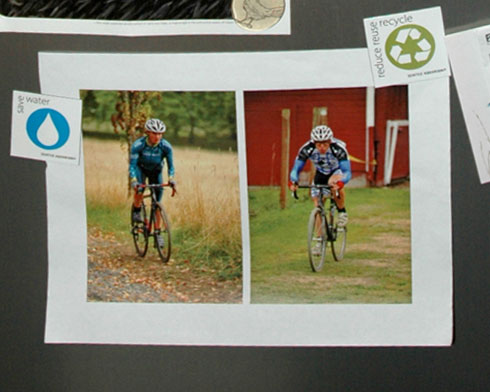
kate_and-_ric_racing