We are excited to have won a place in the City of Seattle ADUniverse 2.0 competition, plus an Honorable mention. CAST is in great company among 15 firms—these winning designs can help lower housing costs with pre-approved designs for ADUs, DADUs, and middle housing.
https://dailyplanit.seattle.gov/announcing-15-new-pre-approved-plans-for-adus-and-middle-housing/
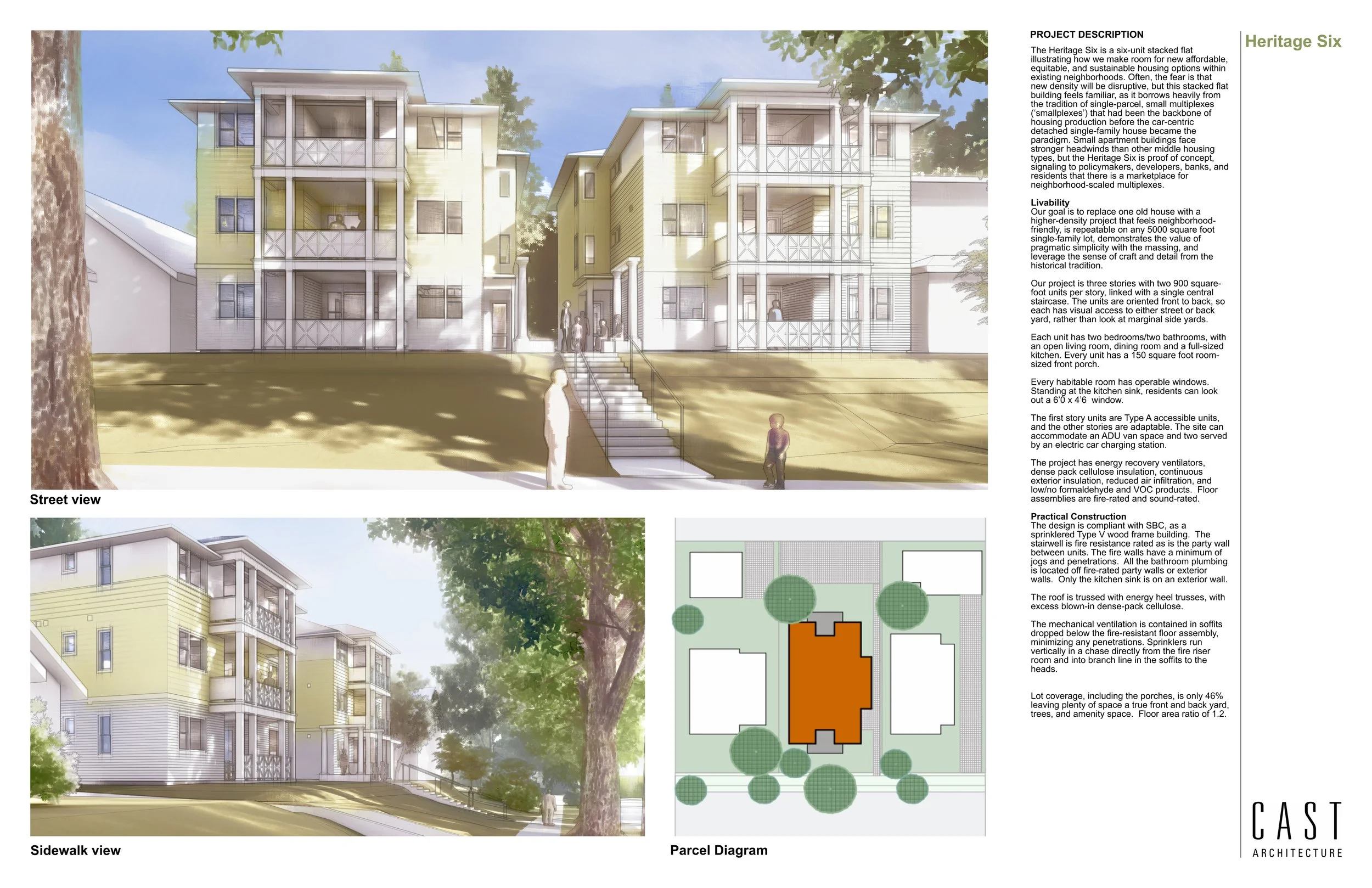
Heritage Six

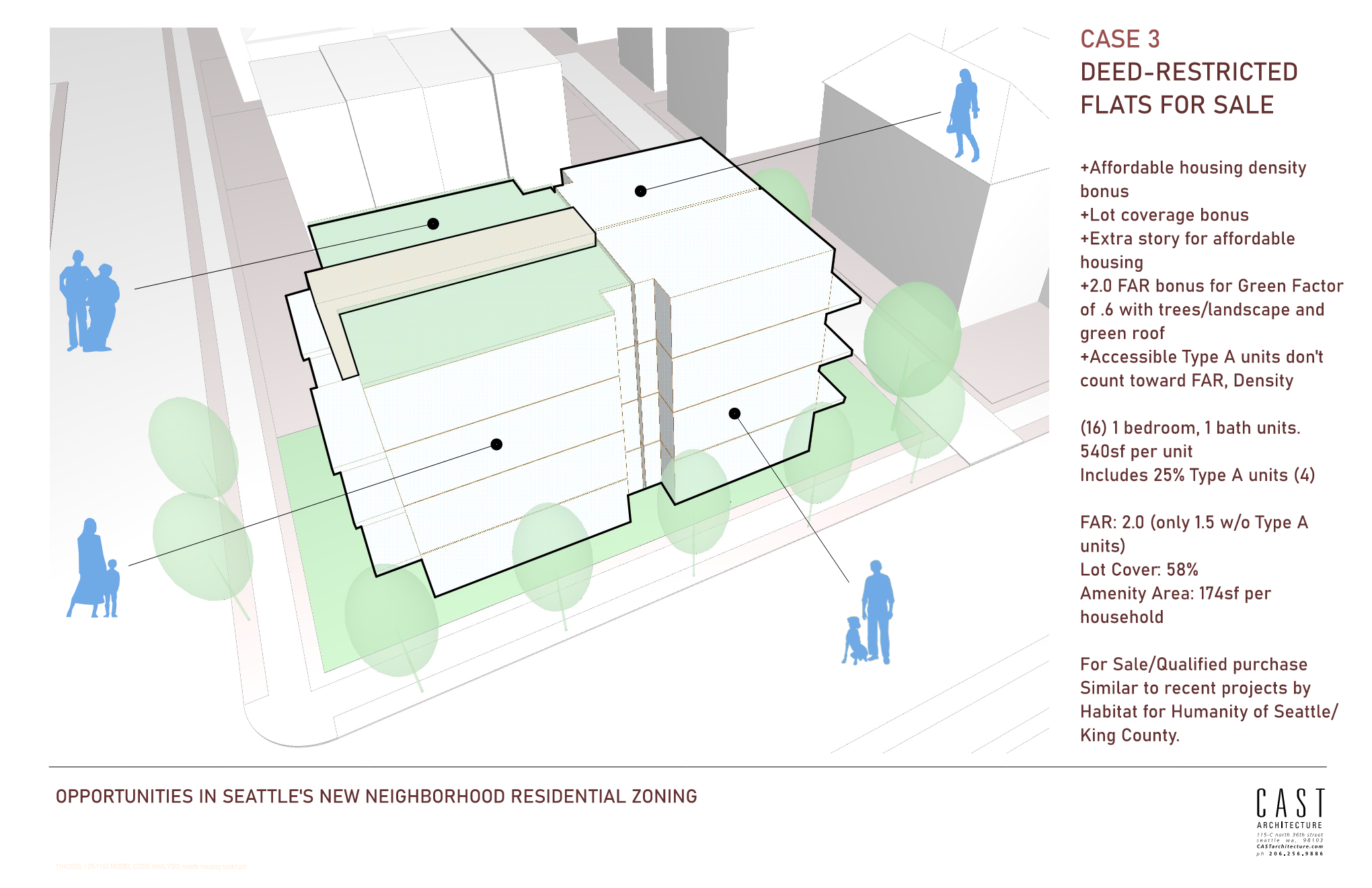
The Heritage Six is a six-unit stacked flat illustrating how we make room for new affordable, equitable, and sustainable housing options within existing neighborhoods.
Our goal is to replace one old house with a higher-density building that feels neighborhood friendly, is repeatable, demonstrates the value of pragmatic simplicity with massing, and leverage the sense of craft and detail from the historic tradition.
It is three-story with two 900 SF homes per story, linked with a single central staircase.
Each home has two bedrooms/two bathrooms, with an open living room, dining room and full-size kitchen. Plus a 150SF room-sized porch.
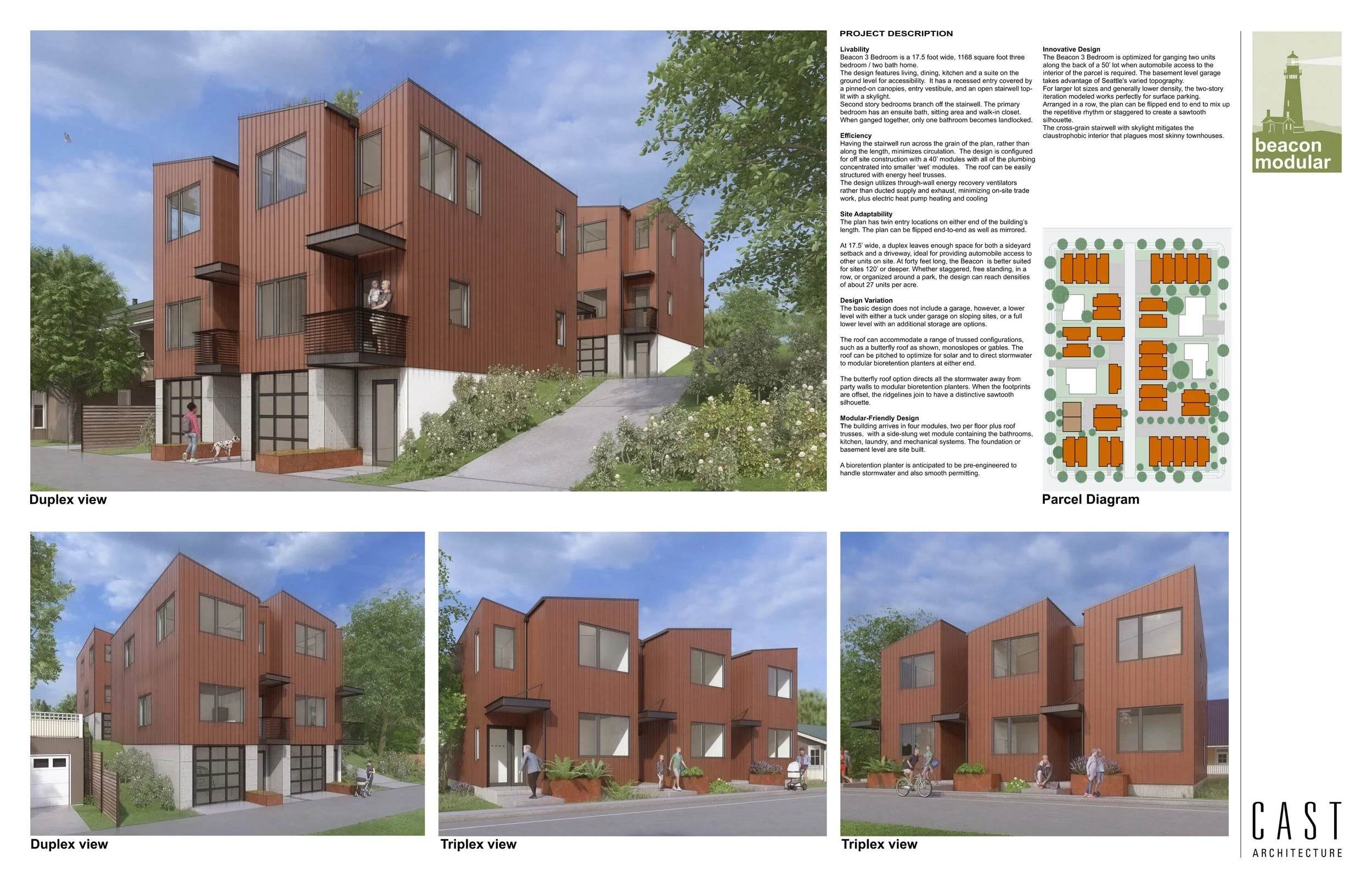
Beacon
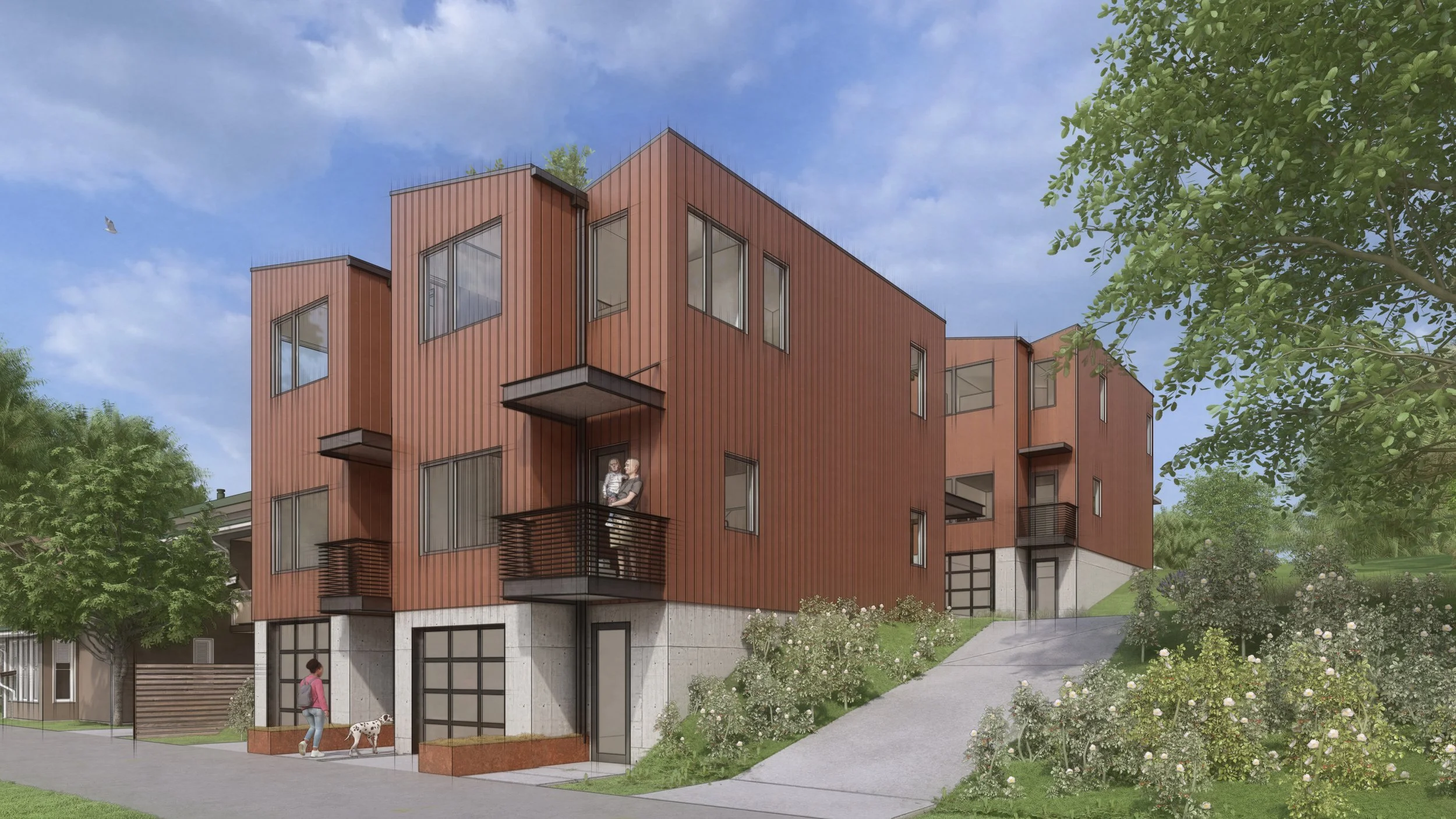
Honorable Mention, Beacon, is a three-bedroom/two-bath home. The design features living, dining, kitchen, and a suite on the ground level for accessibility. It has a recessed entry and an open stairwell topped with a skylight.
The design is configured for off-site construction. The plan has twin entry locations and can be flipped end-to-end as well as mirrored.