Posts in Architecture
Living Building Challenge: Architecture that makes the world a better place

Part of the excitement about the Sunset Substation Park is the goal for sustainable architecture that we've set:  meeting the Living Building Challenge: From the International Living Building Institute:

"Living Building Challenge 2.0 is a cohesive standard – pulling together the most progressive thinking from the worlds of architecture, engineering, planning, landscape design and policy.

It challenges us to ask the question: What if every single act of design and construction made the world a better place?

What if every intervention resulted in greater biodiversity; increased soil health; additional outlets for beauty and personal expression; a deeper understanding of climate, culture and place; a realignment of our food and transportation systems; and a more profound sense of what it means to be a citizen of a planet where resources and opportunities are provided fairly and equitably?

Indeed, “Living Building Challenge” is not a merely a noun that defines the character of a particular solution for development, but more relevant if classified as a series of verbs – calls for action that describe not only the ‘building’ of all of humanity’s longest lasting artifacts, but also of the relationships and broader sense of community and connectivity they engender. It is a challenge to immerse ourselves in such a pursuit - and many refer to the ability to do so as a “paradigm shift”.

The Living Building Challenge is comprised of seven performance areas, or ‘Petals’: Site, Water, Energy, Health, Materials, Equity and Beauty. Petals are subdivided into a total of twenty Imperatives, each of which focuses on a specific sphere of influence. "

This is a relatively new standard, one-upping LEED standards, to think more holistically and less prescriptively about the impacts our buildings have on the greater environment.  I encourage all to check out their website and find out more about this program.  There is a broad overview of the Challenge, but the nitty gritty technical requirements are behind a paid registration firewall.

As we go through it, I'll be posting more information about our experience and the techniques that we're going to employ to meet the Challenge.

Current Events

We're busy, and that is news in an of itself.  Not that we haven't been keeping busy over the last year and half since the big crash, but given the abysmal state of the construction industry as a whole, we're happy to report that anecdotally there seems to be more activity out there (knock on wood). More housing starts, sales, news in the Daily Journal of Commerce about other firms hiring, and some of those holes in the ground out there starting to see renewed activity. So what have we been working on?

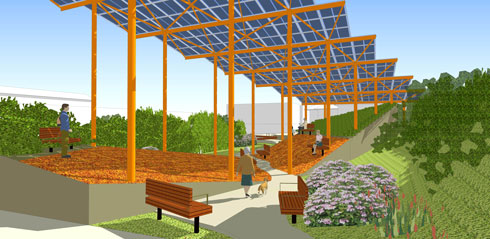
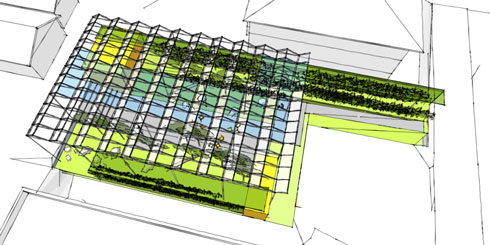
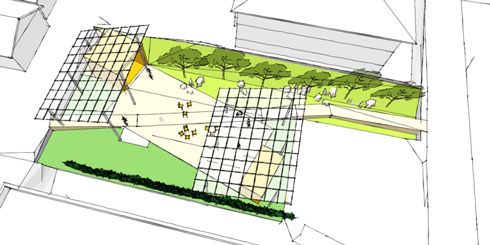
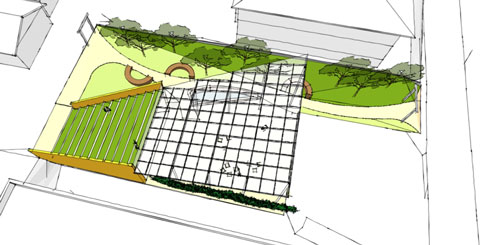
First, check out the latest schemes for the Sunset Substation pocket park in Ballard.  We've made a hybrid scheme out of the three prior options, increased the potential of the solar array, and reworked the parkscape with a more sculptural land forms and a sinuous path from corner to corner:

sunset substation

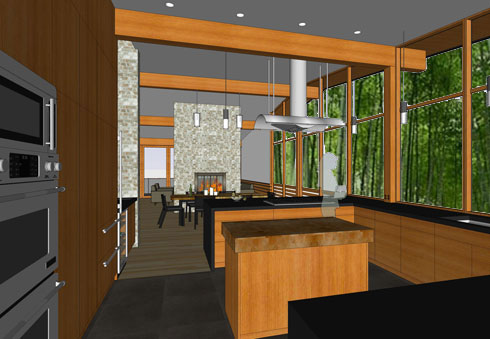
We've also been working on a great remodel/addition in Laurelhurst, opening up a classic midcentury modern house. There is a timber bamboo grove and small park to the north, creating an intimate feeling for the new kitchen and dining room despite the expanse of glass:

laurelhurst midcentury renovation

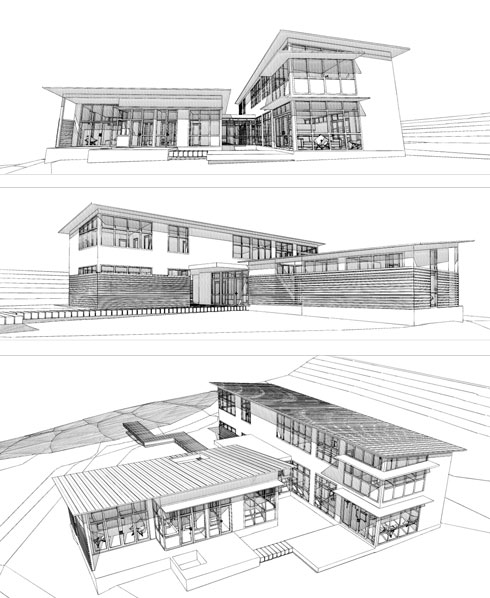
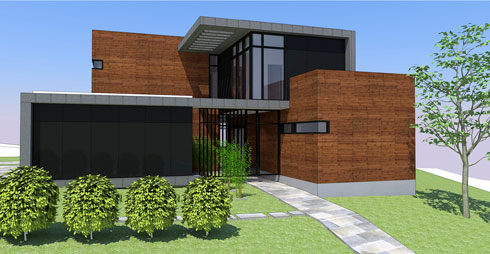
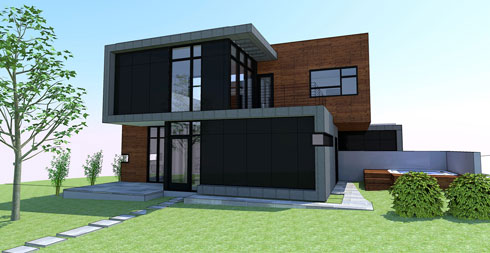
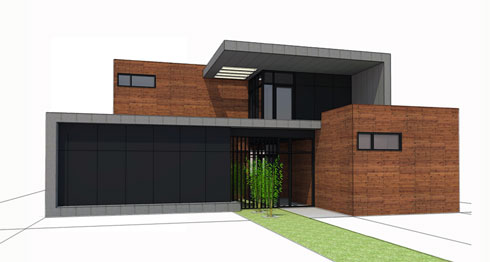
And we're making some progress on the Mitate House. I'm excited that as the design has been refined, we're getting more elegant volumes, a clean functional plan and expanding the opportunities for interaction with the landscape.  I'll be posting more shortly on this one--we're getting the renderings ready for the builder's pre-sale marketing and will highlight the sustainable construction aspects:

Mitate House-3 views of a NW contemporary house

Plus we're working on a live/work in Fremont, renovations in Ballard, Sand Point, Montlake, Capital Hill, a restaurant, 2 backyard cottages, to name a few, and I'll feature some more projects this month.

Sunset Substation Update: Can we meet the Living Building Challenge?

We've done our first presentation of three ideas for the Sunset Substation Park.  More information about the three schemes are here, here, and here. 'BIG ROOF' SCHEME

'PAIR' SCHEME

'WEDGE' SCHEME

The solar component of this park will produce between 20 kW and 30kW, and provide power for the community multipurpose space, and an emergency relief center.

We're looking at meeting the Living Building Challenge, the highest standard for sustainable construction.  It would be a major undertaking, since there are less than a hundred structures in the world currently attempting to meet this challenge, but we have a lot of things going for us at this scale of project.  As the project develops, I'll keeping posting information on the Challenge--how it is affecting the design, and the costs.

Mitate House-a collaboration with Bennett Custom Homes: the Cascabel

OPT-2-2-rendering-exterior-1 We're working in concert with Bennett Custom Homes to design a series of houses which depart from the spec craftsman template that we see in current developments, heavily influenced by Asian design and courtyard houses. The Mitate House Collection is punctuated by gardens: the 'tsuboniwa' or pocket garden, a salad garden off the kitchen/outdoor cooking space, a four season porch, surround gardens that invigorate the side yards, and a water feature.  While we're designing for a more constricted and generic site, we imagine that the design will take more advantage of the specific site once we have one.

Each design will be loaded with green building features, have an enlarged 'shoebox' entry with space, loft, a carport that doubles as an outdoor room, and a covered spa area with outdoor shower.

We've come up with three alternative designs which will help Bennett bring some exciting ideas to the spec marketplace, and give people a new perspective about what is possible in a spec housing.

Here is the first of three designs:  the Cascabel

OPT-2-3-rendering-exterior-2

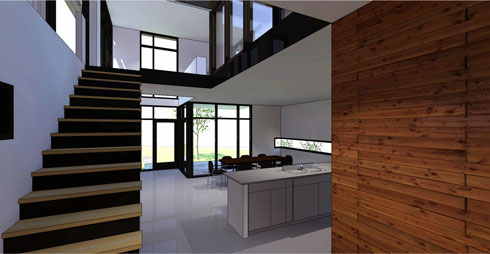
The house is a dialogue between solid and void spaces, where the house elements have been pulled apart to create gardens, covered outdoor spaces, habitable roof gardens and some dramatic interior spaces:

OPT-2-4-rendering-interior

For more information and plans, jump below the fold:

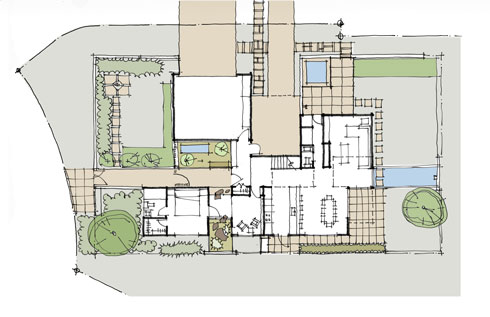
First floor:

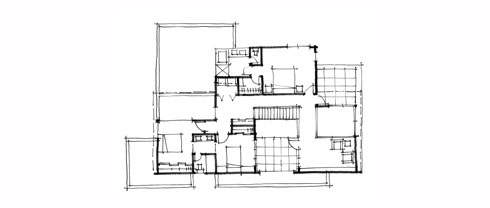
OPT-2-KO-PLAN-FLOOR-1Second floor:

OPT-2-KO-PLAN-FLOOR-2

Mitate House--a collaboration with Bennett Custom Homes: the Tisane

OPT-1-2-rendering-exterior-1-alternate OPT-1-3-rendering-exterior-2-alternate

The design juxtaposes a boxy 2 story element with several low slung volumes split with a slot garden at the core of the house.  The house has a massive wall running the length of the house that becomes fireplace and storage, but is broken to create a two story atrium adjacent to the garden.

OPT-1-4-rendering-interior

The house has a series of gardens beyond the 'tsuboniwa' (pocket garden)--a private courtyard adjacent to the guest suite, a salad garden for growing vegetables off the kitchen, a broad outdoor patio wrapped in planting, and a roof garden off the master bedroom.

For more information and plans, jump below the fold:

First floor:

OPT-1-SH-PLAN-FLOOR-1Second floor:

OPT-1-SH-PLAN-FLOOR-2

Mitate House: A collaboration with Bennett Custom Homes--the Sorrel

OPT-3-2-rendering-exterior-1-REDO The last in our Mitate House Collection for Bennett Custom Homes is the Sorrel.

Again, the heart of the design is a courtyard garden, which is bounded on one side by the open kitchen/dining/living room and the guest suite on the other. Large doors open each space to the garden.  Privacy is critical in most developments and by making the garden central, we are creating a private interior landscape, daylighting, and ventilation without compromising to shield the neighbors eyes.

OPT-3-1-rendering-aerial

OPT-3-4-rendering-interior

For more information and plans, jump below the fold:

One the key elements to this design is that the pathway from entry to living spaces shifts, bridging across the garden, to create a emotional transition point from the outside world to the interior of the house, similar to the stone bridges you often see in Japanese gardens:

kubota-stone-bridge

First floor:

OPT-3-TH-PLAN-floor-1Second floor:

OPT-3-TH-PLAN-floor-2

Phinney Ridge backyard cottage

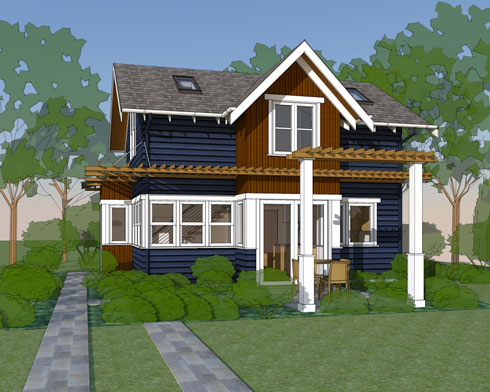
phinney ridge backyard cottage We have been working with a couple who are planning on moving out of the original house, and into a new backyard cottage.  We're pushing the limits within the ordinance--almost exactly 800 square feet--in order to build a 2 bed room, bath and a half cottage. Although the house is small, the spaces inside feel just right.  And we'll be able to include a lot of high finish touches and crisp details because we aren't spending money on lots of square footage. Having a finite perimeter and volume really focuses the mind on the priorities of the design.
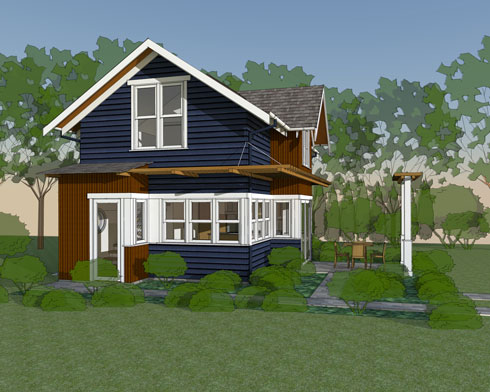
The character of the house the client's wanted is very craftsman and the scale and roofline fits right in with the neighborhood in general--certainly not the scary developer vision that opponents of the ordinance summoned during the public hearings.  It reinforces that these projects are for people with a vested interest in both their property and their neighborhood and are very sensitive to the impact on their neighbors.

Here is another view which shows off the walkout patio off the dining space, the entry mudroom and the band of windows that wrap the living room, dining and kitchen:

seattle backyard cottage in phinney ridge

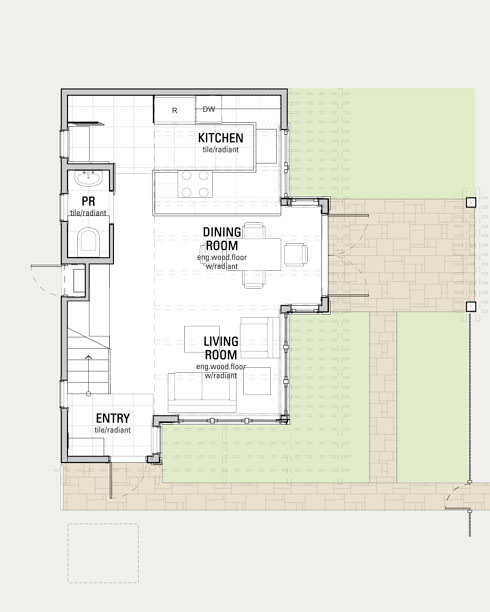
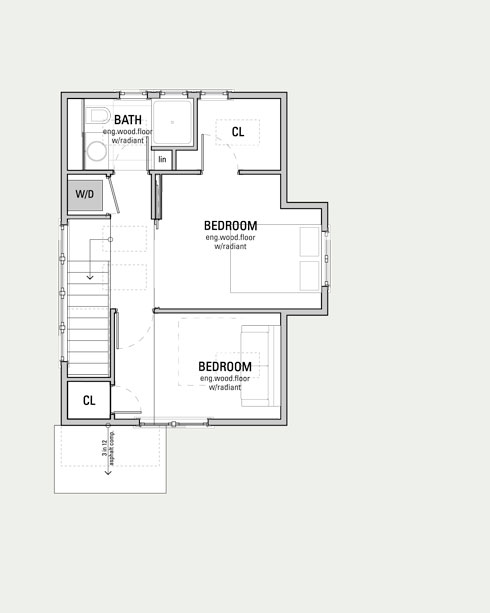
We are also going to integrate a rain water harvesting system, radiant floors on a super efficient combination boiler, vaulted ceiling upstairs, and a extra height crawlspace with a rat slab to make up for some of the storage space lost in the downsizing.  For floor plans, follow the jump below:

First floor plan:

widner-1st-FLOOR

Second floor plan:

widner-second-FLOOR

Current events

New spec house in Issaquah Highlands We've completed the first community design workshop for the Sunset Substation pocket park and we've started a blog for the project at www.SunsetSubstation.org.  The results of the workshop are posted here and you can read a write up from the Ballard News tribune here and another article from KOMO's neighborhood blog here. Now that we have some community input, we can start shaping their unique goals for bringing solar power generation and community space together.

In other news, Stefan is working through designing a micro-hydroelectric generation station for an eco-retreat/outdoor recreation center and meditation retreat in Colorado, and should be posting an introduction to the project and more information about micro-hydro.  Suddenly, we have a lot of projects which have some active or passive alternative energy components--very exciting stuff.

Tim is leading the charge on backyard cottages.  We have two custom cottages currently in design, and another design which will be available as a prefab.  We're finalizing the pricing, so we will have a more comprehensive information available soon.

We're also working with a homebuilder  to develop a series of spec homes bases on a fusion of asian design, modern spaces and out of the norm materials (see image above).  We're especially excited because the house's function emphasizes a series of landscapes integrated into living spaces, so we'll have courtyards, pocket gardens, and salad gardens for growing your own vegetables off the kitchen.  Our big presentation is on Tuesday so I'll post the schematic renderings afterwards.

Finally, this is the last weekend to see our WASTE NOT installation in the alley east of First Avenue, south of Occidental Park.  Anyone need 2500 2 liter bottles?

BACKYARD COTTAGES PROFILED ON THE SEATTLE CHANNEL

The Seattle channel recently interviewed myself and CAST clients Kate Lichtanstein and Ric Cochrane regarding the backyard cottage we are currently working on together. They included our project in a broader story that profiles an owner of a recently completed backyard cottage and gives a basic outline of the new Seattle backyard cottage ordinance.

Seattle Channel Video can be played in Flash Player 9 and up
New house in Sand Point

In the fall, we started the design for a new house in Sand Point.  Although the project stalled here in schematic design, we were very excited about the work, and hopefully it will come back in some form (we recycle!).  Here are the three schematic designs we presented: Scheme 1:  PLUS

The clients wanted to have a 'permeable' house with soft transitions that welcomed neighbors but kept private space private.  The design delineated the corner site into 4 quadrants with varying degrees of privacy.  A manicured garden graces the stepped path from the very public corner, while the upper drive on the southwest provides the day to day family entrance (at grade for the client's aging parents.  One the northeast, a wide terrace off the living spaces provides a great entertaining space that opens to the more quiet neighborhood edge.  The two volumes of the plus create a very private backyard on the southeast.

The house has a very clean organization--living spaces are lined up in the lower volume, each with access to the eastern terrace/backyard, with the bedrooms stretched across the second story volume.  The second story volume bridges over the first story, bookended with a mudroom and a semi-detached mother-in-law, creating two apertures--one for the entry, the second for an covered outdoor living room.  At the intersection of the two volumes we have an atrium with a sculptural stair.

PLUS-aerial view

PLUS-street view

PLUS first floor plan

PLUS-second floor plan

Scheme 2:  HINGE

The second scheme is also addresses the clients' concerns about overwhelming the street, creating a private backyard, and blurring the edge between garden and house.  The design features a low slung wood and glass box with a broad, planar green roof along the west edge of the site.  A two story box, following the north site edge, contains the living room, media room and mother-in-law on the main floor, with bedrooms and a double studio/playroom above.

HINGE-street view

If the first scheme is PLUS, this one probably should have been nicknamed 'minus' because the overlap of the two volumes is subtracted to make a dramatic vertical space where the geometries interact.  In the morning, light floods the kitchen.  In the evening, the screened/glass wall on the western wall of the second story filters through to the living room:

HINGE-interior at entry

HINGE-first floor

REVISED-floorplan---hinge-floor-2

Scheme 3:  WING

The central idea of the WING scheme is two volumes--one private, one public--connected by a glass skinned entry, under a big angular roof.  Again we're reinforcing the site's geometry to vary the degrees of privacy and expand the livable space of the house beyond the envelope with a series of outdoor spaces each with a unique character and function.  At the corner, a terrace defined with a low seat wall, is the place for after dinner drinks, sunsets, and engaging with the neighbors. Toward the backyard, we have a perfect spot for baking in the summer sun, and a outdoor hangout/informal dining space with fireplace adjacent to the kitchen.

WING-street view

WING-backyard

WING-first floor

WING-second floor

Of the three options, the clients' preference was PLUS.  It has the strongest volumetric presence, an elemental simplicity and it handled the site issues and their program with sophistication and subtlety.