Posts in CAST Projects
BLOGGING A SEATTLE BACKYARD COTTAGE – CONSTRUCTION START - a CAST architecture case study project

beam-ends Kate and Ric have begun construction on their backyard cottage... They have been working hard the last few weeks and have enlisted the help of a few friends and colleagues along the way. A few key players have been helping guide us through the process:

  • Rusty Borromeo of Borromeo Construction LLC is providing his general contractor and construction expertise
  • James Jenkins of O'Brien & Company is contributing his green building knowledge and will be our Built Green Verifier  - we are aiming for 5 star Built Green certification
  • Cory Fraser of LFD Structural Engineering LLC provided the calculations and engineering for our plan set

Ric has been doing a wonderful job of photographing the process and has put together a few galleries of the construction process thus far (all images in this post are © 2010 Ric Cochrane). He has also agreed to write up a blog post on the experience thus far - so stay tuned for that!

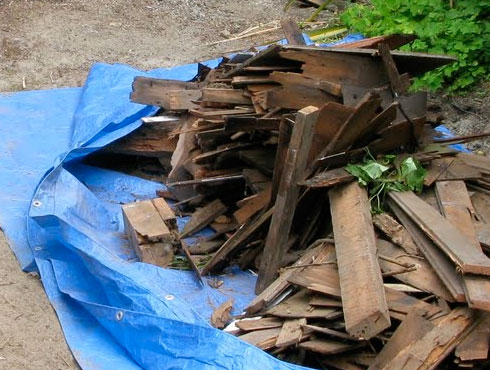
DECONSTRUCTION GALLERY An existing shed (that was a bit worse for wear) was painstakingly deconstructed and all reusable and recyclable materials were sorted and stacked deconstruction
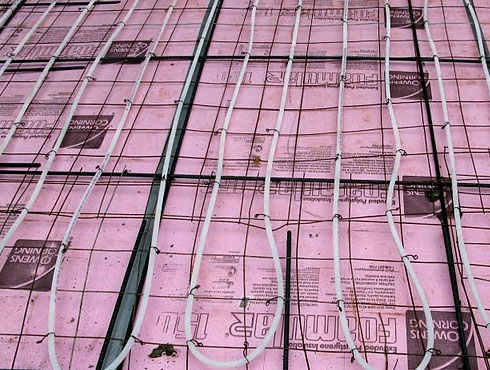
LABOR OF LOVE - THE FOUNDATION Digging in the dirt and other fun activities - the true definition of 'sweat equity!' slab
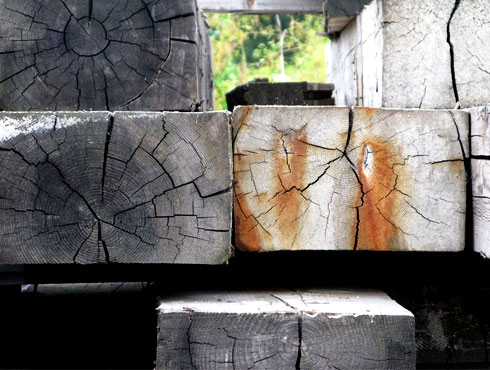
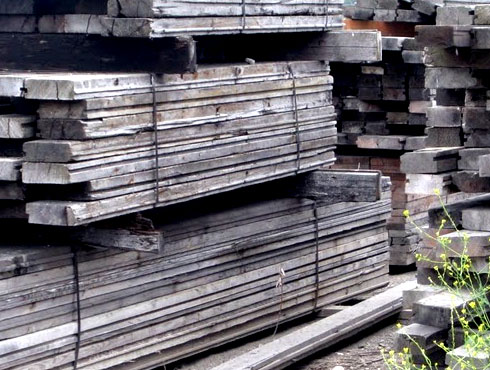
LUMBER FROM THE BONE-YARD Salvaged beams, columns and decking are being purchased from Bruce Borjesson of Pacific Resources boneyard
CAST architecture in Seattle Homes and Lifestyles magazine

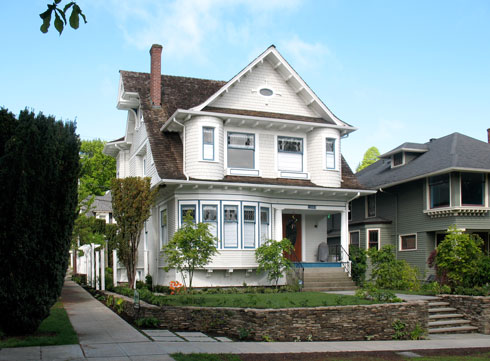
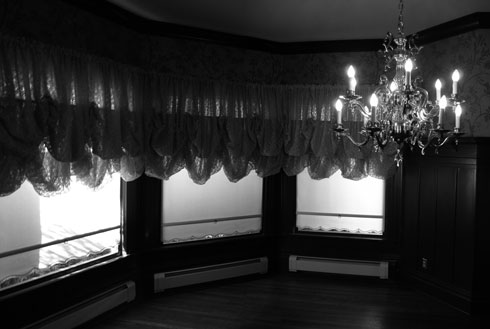
capitol hill after We just heard that one of our past projects is going to be featured in Seattle Homes and Lifestyles next year!  The project was a remodel of a classic victorian on Capitol Hill. The original house was well kept, but overgrown, dark with a tiny kitchen:
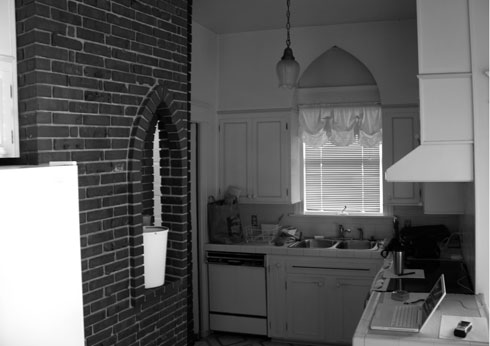
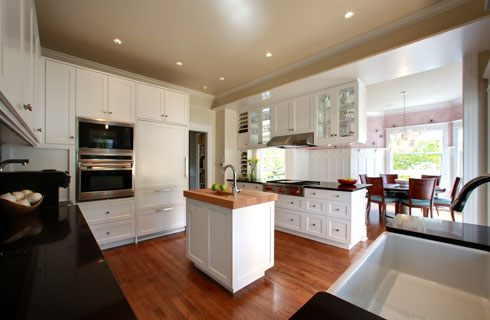
capitol hill kitchen: before the remodel

before the remodel: the dining room

The walls in the dining room were forest green, but you couldn't even really tell, because of the heavy drapes, and the 15' hedge that was gradually consuming the site.

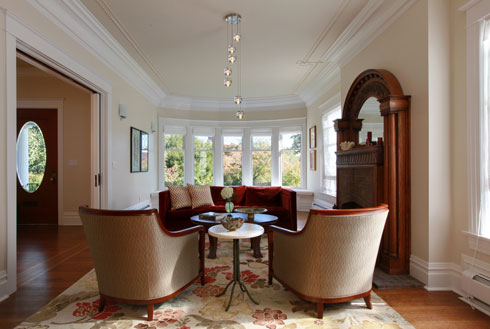
We took down the hedge, pulled the drapes, then started cutting into the house to open up the spaces, and connect the house to the outside world.  We added an elegant back porch, perfect for grilling, using all the period details down to the last dentil.  Even though we maintained the perimeter of the existing house, by using the space better, we were able to triple the kitchen's size, and put in built-ins to maximize every corner without altering the character of the house.

capitol hill kitchen: after

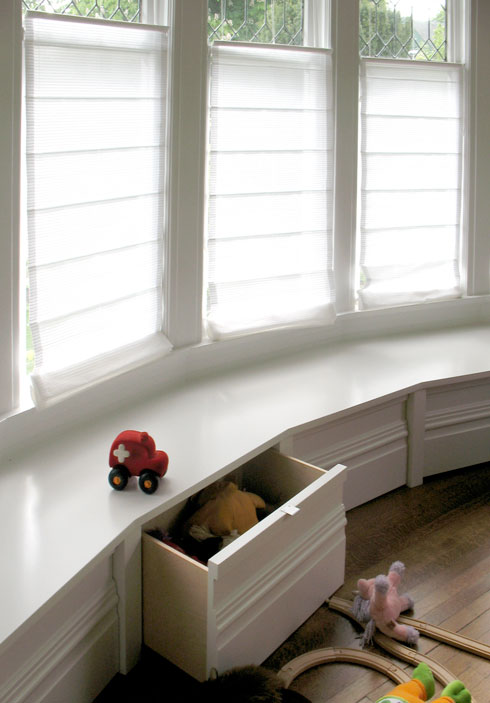
new bench seat following the big bay window, with concealed storage for kids'

capitol-hill-living-room

Another park proposal: Parkour Park to fill in some of the urban voids left by the recession

In collaboration with Parkour Visions, we put together a proposal to turn a site at 19th and Madison (currently an empty lot, that ironically Kevin in our office designed a 4 unit complex for at a prior firm before the economy tanked) into a Parkour Park.  Parkour Visions, in addition to being a gym (and one of our building's tenants), does training, classes, and preaches the Parkour gospel to the masses.  If you aren't familiar with Parkour, check this out: video clip 1:

video clip 2:

The proposal (found here), is for a Seattle Design Commission competiton called "Holding Pattern" to create temporary uses for vacant land spread throughout  the city, with the goal to activate these urban spaces.  We'll find out next week if the ParkOurPark is going to get the green light!

Living Building Challenge: Architecture that makes the world a better place

Part of the excitement about the Sunset Substation Park is the goal for sustainable architecture that we've set:  meeting the Living Building Challenge: From the International Living Building Institute:

"Living Building Challenge 2.0 is a cohesive standard – pulling together the most progressive thinking from the worlds of architecture, engineering, planning, landscape design and policy.

It challenges us to ask the question: What if every single act of design and construction made the world a better place?

What if every intervention resulted in greater biodiversity; increased soil health; additional outlets for beauty and personal expression; a deeper understanding of climate, culture and place; a realignment of our food and transportation systems; and a more profound sense of what it means to be a citizen of a planet where resources and opportunities are provided fairly and equitably?

Indeed, “Living Building Challenge” is not a merely a noun that defines the character of a particular solution for development, but more relevant if classified as a series of verbs – calls for action that describe not only the ‘building’ of all of humanity’s longest lasting artifacts, but also of the relationships and broader sense of community and connectivity they engender. It is a challenge to immerse ourselves in such a pursuit - and many refer to the ability to do so as a “paradigm shift”.

The Living Building Challenge is comprised of seven performance areas, or ‘Petals’: Site, Water, Energy, Health, Materials, Equity and Beauty. Petals are subdivided into a total of twenty Imperatives, each of which focuses on a specific sphere of influence. "

This is a relatively new standard, one-upping LEED standards, to think more holistically and less prescriptively about the impacts our buildings have on the greater environment.  I encourage all to check out their website and find out more about this program.  There is a broad overview of the Challenge, but the nitty gritty technical requirements are behind a paid registration firewall.

As we go through it, I'll be posting more information about our experience and the techniques that we're going to employ to meet the Challenge.

Current Events

We're busy, and that is news in an of itself.  Not that we haven't been keeping busy over the last year and half since the big crash, but given the abysmal state of the construction industry as a whole, we're happy to report that anecdotally there seems to be more activity out there (knock on wood). More housing starts, sales, news in the Daily Journal of Commerce about other firms hiring, and some of those holes in the ground out there starting to see renewed activity. So what have we been working on?

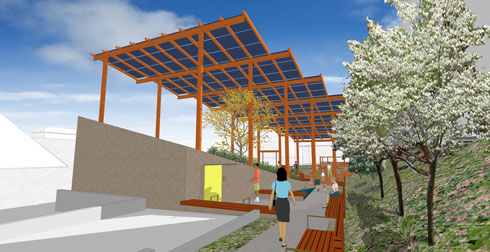
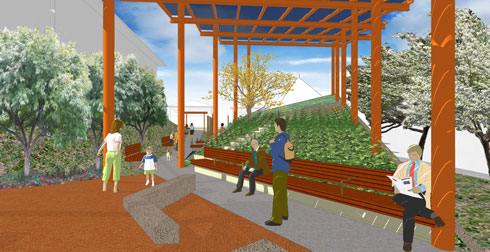
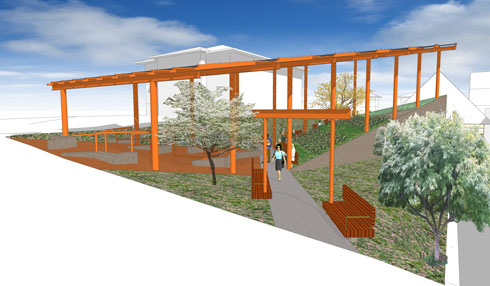
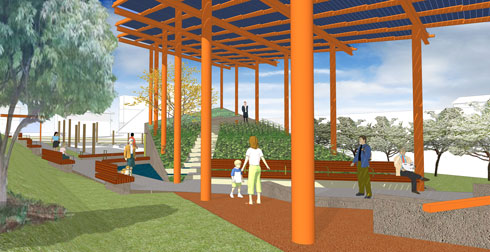
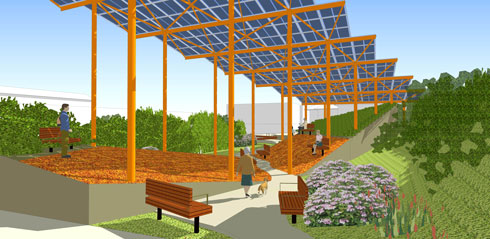
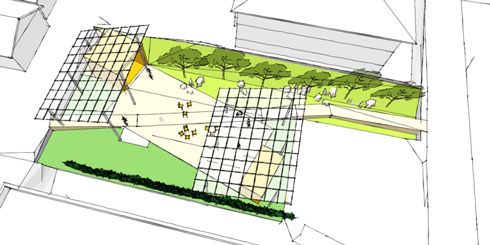
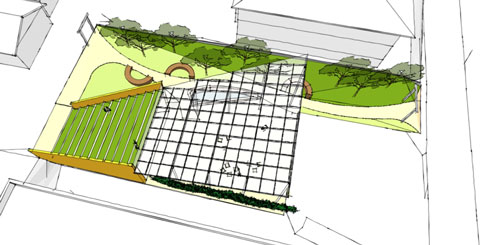
First, check out the latest schemes for the Sunset Substation pocket park in Ballard.  We've made a hybrid scheme out of the three prior options, increased the potential of the solar array, and reworked the parkscape with a more sculptural land forms and a sinuous path from corner to corner:

sunset substation

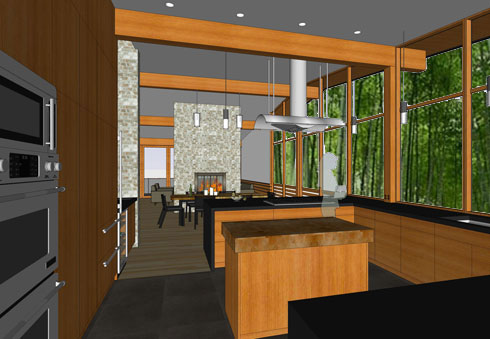
We've also been working on a great remodel/addition in Laurelhurst, opening up a classic midcentury modern house. There is a timber bamboo grove and small park to the north, creating an intimate feeling for the new kitchen and dining room despite the expanse of glass:

laurelhurst midcentury renovation

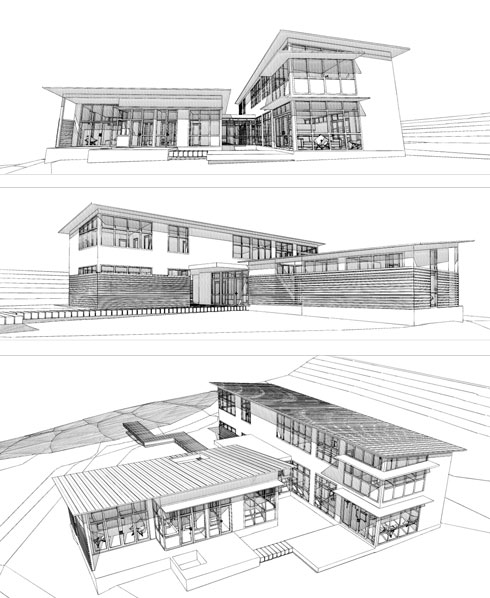
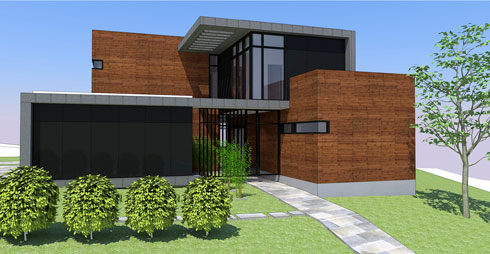
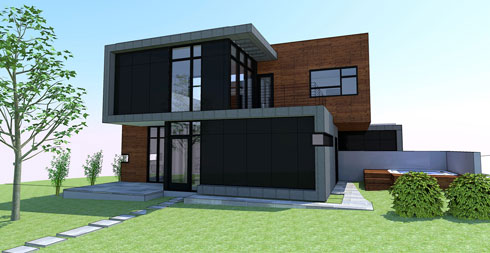
And we're making some progress on the Mitate House. I'm excited that as the design has been refined, we're getting more elegant volumes, a clean functional plan and expanding the opportunities for interaction with the landscape.  I'll be posting more shortly on this one--we're getting the renderings ready for the builder's pre-sale marketing and will highlight the sustainable construction aspects:

Mitate House-3 views of a NW contemporary house

Plus we're working on a live/work in Fremont, renovations in Ballard, Sand Point, Montlake, Capital Hill, a restaurant, 2 backyard cottages, to name a few, and I'll feature some more projects this month.

Sunset Substation Update: Can we meet the Living Building Challenge?

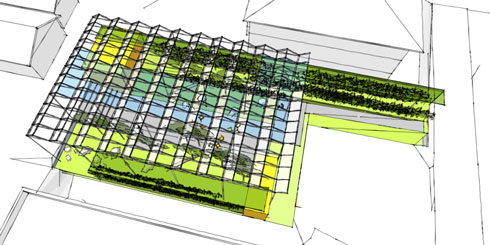
We've done our first presentation of three ideas for the Sunset Substation Park.  More information about the three schemes are here, here, and here. 'BIG ROOF' SCHEME

'PAIR' SCHEME

'WEDGE' SCHEME

The solar component of this park will produce between 20 kW and 30kW, and provide power for the community multipurpose space, and an emergency relief center.

We're looking at meeting the Living Building Challenge, the highest standard for sustainable construction.  It would be a major undertaking, since there are less than a hundred structures in the world currently attempting to meet this challenge, but we have a lot of things going for us at this scale of project.  As the project develops, I'll keeping posting information on the Challenge--how it is affecting the design, and the costs.

Mitate House-a collaboration with Bennett Custom Homes: the Cascabel

OPT-2-2-rendering-exterior-1 We're working in concert with Bennett Custom Homes to design a series of houses which depart from the spec craftsman template that we see in current developments, heavily influenced by Asian design and courtyard houses. The Mitate House Collection is punctuated by gardens: the 'tsuboniwa' or pocket garden, a salad garden off the kitchen/outdoor cooking space, a four season porch, surround gardens that invigorate the side yards, and a water feature.  While we're designing for a more constricted and generic site, we imagine that the design will take more advantage of the specific site once we have one.

Each design will be loaded with green building features, have an enlarged 'shoebox' entry with space, loft, a carport that doubles as an outdoor room, and a covered spa area with outdoor shower.

We've come up with three alternative designs which will help Bennett bring some exciting ideas to the spec marketplace, and give people a new perspective about what is possible in a spec housing.

Here is the first of three designs:  the Cascabel

OPT-2-3-rendering-exterior-2

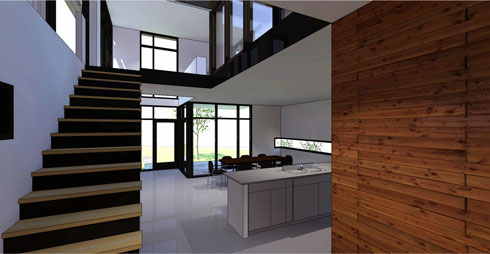
The house is a dialogue between solid and void spaces, where the house elements have been pulled apart to create gardens, covered outdoor spaces, habitable roof gardens and some dramatic interior spaces:

OPT-2-4-rendering-interior

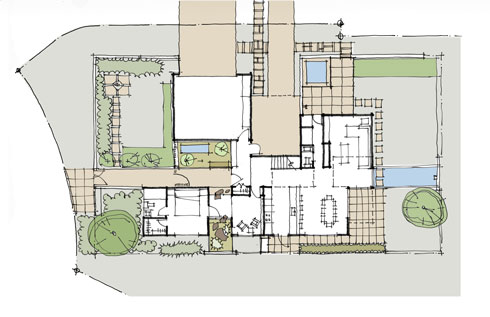
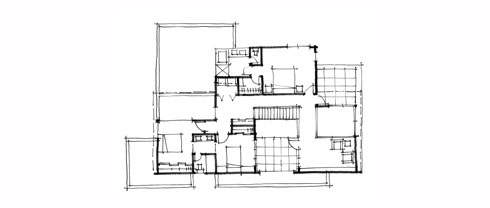
For more information and plans, jump below the fold:

First floor:

OPT-2-KO-PLAN-FLOOR-1Second floor:

OPT-2-KO-PLAN-FLOOR-2